
30-year-old North Sea project gets gas boost with early start to its next chapter
Equinor and its partners have launched production from the Troll Phase 3 stage 2 project ahead of schedule, facilitating the delivery of 55 billion cubic meters of gas to European markets.
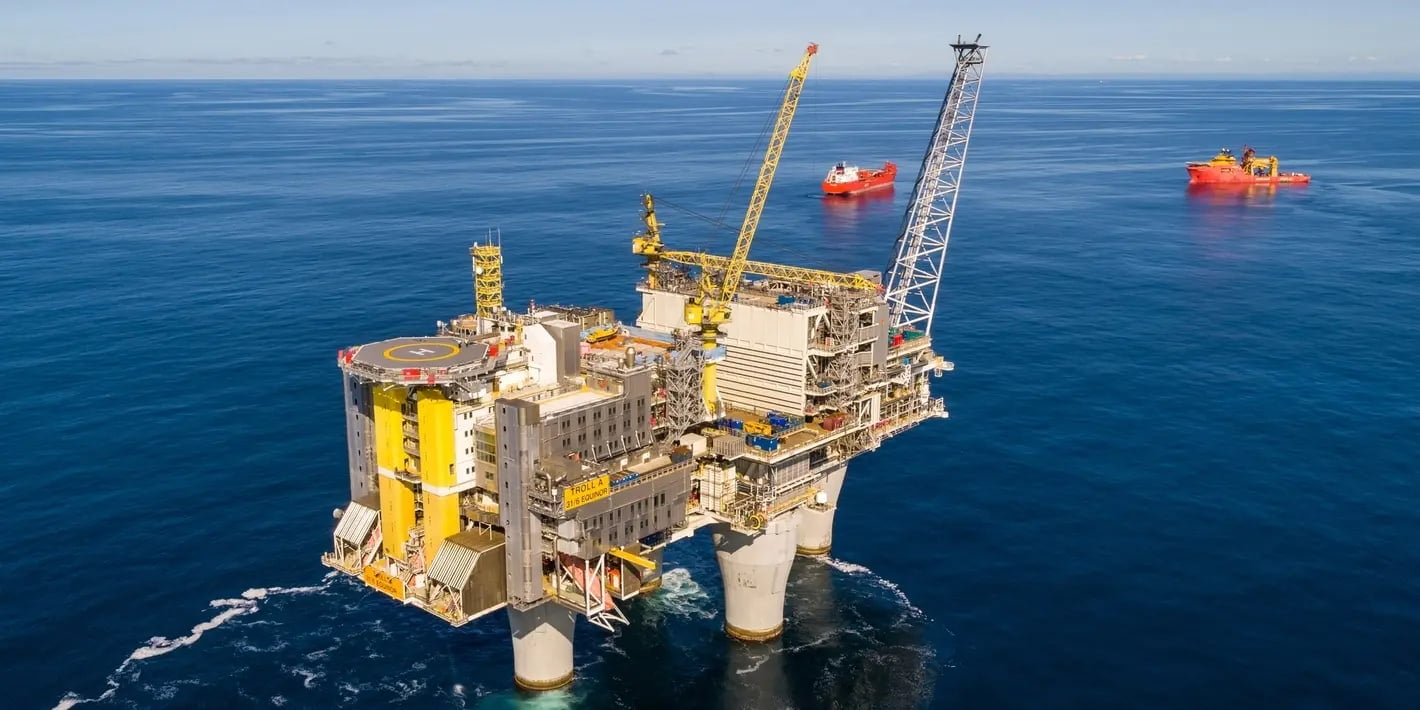
The Troll Phase 3 stage 2 subsea project commenced production on August 22, 2026, reaching operational status earlier than the year-end target. According to Offshore Energy, the expansion aims to speed up the extraction of 55 billion cubic meters of gas from the Troll West reservoir. This development utilizes the existing Troll A platform and the Kollsnes processing plant, the latter of which is celebrating its 30th anniversary this year.
Project execution costs totaled approximately $1.32 billion, finishing several hundred million Norwegian kroner under the original budget. Operators attributed the early start and savings to efficient marine logistics and a drilling campaign that concluded 25 percent faster than anticipated. The infrastructure relies on standardized subsea designs and shore-based electricity to maintain high export volumes while minimizing the carbon footprint of production.
Equinor serves as the operator for the Troll partnership alongside Petoro, A/S Norske Shell, TotalEnergies, and ConocoPhillips. Lill Harriet Brusdal, a vice president for the project, stated that "Troll is the backbone of Norwegian gas exports to Europe." The field currently holds nearly 40 percent of the gas reserves on the Norwegian Continental Shelf and satisfies roughly 10 percent of European gas demand.
Editorial Desk — Trade Flow Insight. Reporting and market notes compiled by the Trade Flow Insight editorial team.
Related coverage
Europe Braces for a Winter Energy Crisis as Gas Reserves Run Low
After months of elevated energy prices, Europe can expect fuel costs to continue rising through the winter months as demand grows. Ongoing energy trade constraints and threats to energy infrastructure across the Middle East are expected to limit global energy supplies and continue to drive up prices, hitting consumers hard unless governments intervene. The European Union (EU) is thought to have paid an additional €100 billion on oil and gas so far this year, prompting EU ministers to seek ways to manage the impact of high fuel prices. Since…
Oil Advances Amid War and Hurricane Risks
Oil prices edged higher as Middle East tanker attacks and Hurricane Isaias heightened supply concerns.

Australia to Release Final Plan to Keep More LNG at Home
Australia is set to unveil the final version of a controversial plan to force liquefied natural gas producers to reserve as much as a fifth of their output for local buyers.