
Alkagesta Expands European Biofuels Footprint via Integrated Value Chain
The commodity trader is scaling its biofuels presence by connecting niche feedstock suppliers with major European refiners and blenders through a structured compliance framework.
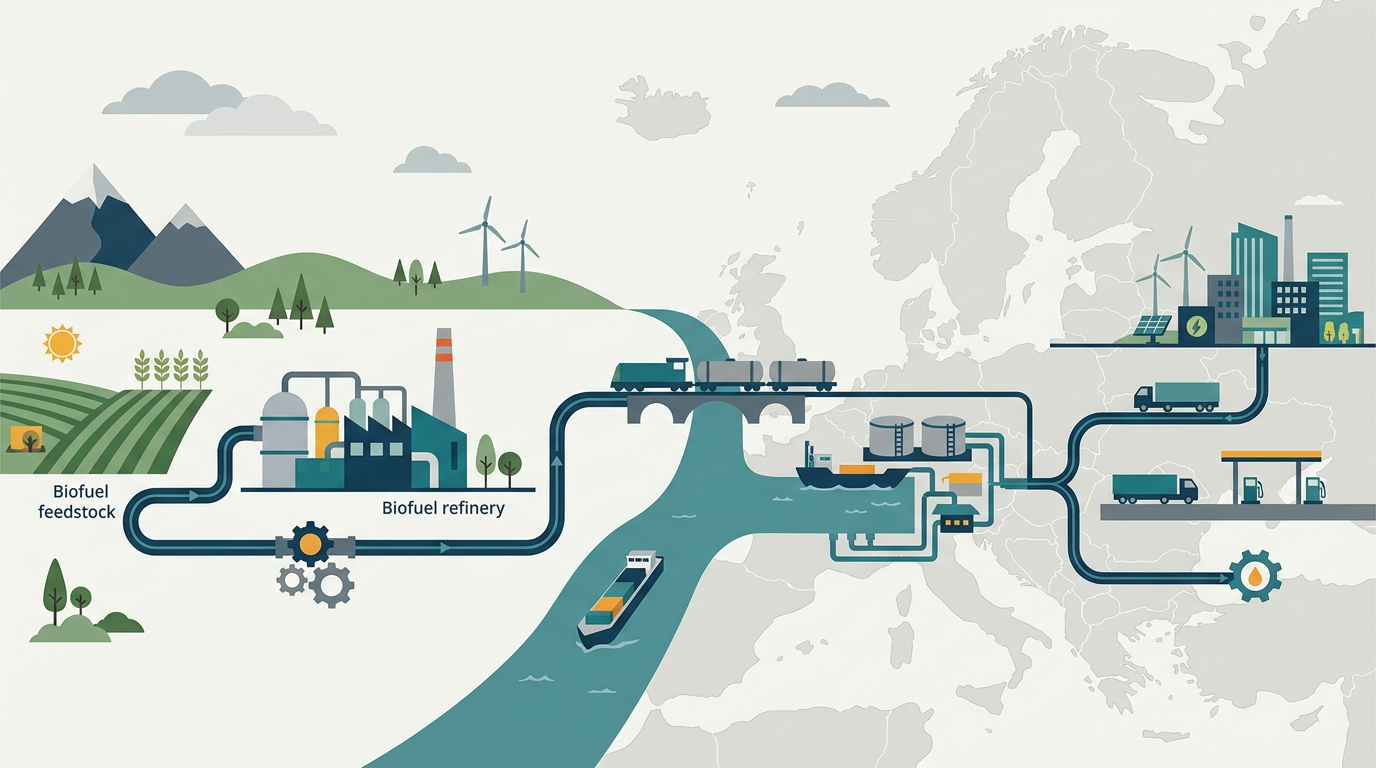
Alkagesta is increasing its influence within the European biofuels sector by managing activities across the entire production cycle, according to Biofuels International Magazine. The company handles a variety of products including FAME, HVO, and advanced fuels, serving a range of clients from large national energy firms to local waste collectors. By operating across multiple jurisdictions, the firm has established a resilient business model capable of navigating the complex regulatory landscapes and shifting market conditions inherent to the renewable energy industry.
A primary focus for the company is bridging the gap between small-scale feedstock providers and the broader commodity market. According to Biofuels International Magazine, many niche producers lack the sophisticated trading infrastructure required by modern standards. Alkagesta addresses this by providing the necessary legal, financial, and logistical frameworks. This support allows smaller suppliers to reach major European biodiesel refiners and sustainable aviation fuel producers, ensuring these emerging players receive fair market value for their specialized feedstocks.
The firm’s operational capabilities cover a wide range of logistics, managing everything from individual truck shipments to large seagoing vessels. This flexibility is supported by an internal team with expertise in trade finance, derivatives, and risk management. Anthony Guida, a biofuels trader at the company, stated that "operating in a controlled environment benefits all parties involved" by fostering best practices and enhancing efficiency. This disciplined approach is intended to protect the entire delivery cycle for both buyers and sellers.
As one of the largest non-refinery traders in Europe, Alkagesta is positioning itself to support the continent's broader decarbonization goals by integrating local players into the mainstream market. The company continues to seek new partnerships with both veteran industry participants and new entrants as the biofuels sector evolves. By standardizing processes and applying rigorous controls, the firm aims to mitigate risks while expanding its sourcing of niche feedstocks from key global regions to meet rising demand.
Unternehmensdossier
Alkagesta
Alkagesta is a commodity trading company active in petroleum products, with a business built around fuel oil, gasoil and related refined products. Its activity spans physical supply, storage and the shipping arrangements required to move cargoes between refining centres and demand markets.
Alle Berichte über Alkagesta →Helena Marsh — Energy Markets Editor. Helena covers crude, refined products and the trading houses that move them, with a focus on price formation in the Mediterranean and Black Sea.
Verwandte Beiträge

Europa rüstet sich für eine winterliche Energiekrise angesichts niedriger Gasreserven
Nach Monaten erhöhter Energiepreise muss Europa damit rechnen, dass die Kraftstoffkosten im weiteren Verlauf der Wintermonate bei steigender Nachfrage weiter zunehmen werden. Anhaltende Einschränkungen im Energiehandel und Bedrohungen der Energieinfrastruktur im Nahen Osten dürften das globale Energieangebot begrenzen und die Preise weiter in die Höhe treiben, was die Verbraucher hart treffen wird, sofern Regierungen nicht eingreifen. Es wird angenommen, dass die Europäische Union (EU) in diesem Jahr bereits zusätzlich 100 Milliarden Euro für Öl und Gas gezahlt hat, was die EU-Minister dazu ve

Ölpreise steigen angesichts von Kriegs- und Hurrikanrisiken
Die Ölpreise legten leicht zu, da Tankerangriffe im Nahen Osten und Hurrikan Isaias die Sorgen um das Angebot verschärften.

Australien veröffentlicht endgültigen Plan zur Sicherung von mehr LNG für den Heimatmarkt
Australien steht kurz vor der Vorstellung einer endgültigen Fassung eines umstrittenen Plans, der Flüssigerdgas-Produzenten dazu zwingt, bis zu ein Fünftel ihrer Produktion für lokale Abnehmer zu reservieren.