
GM targets development costs with commercial vehicle ECM
General Motors' B2B division introduces a custom engine control module to expedite the integration of 6.6-liter gas engines into diverse commercial vehicle platforms.
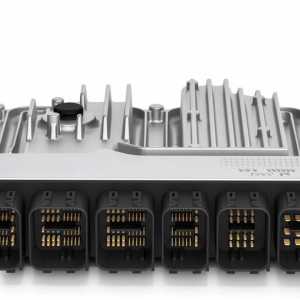
General Motors Powered Solutions has introduced a new engine control module designed to simplify the installation of its 6.6-liter heavy-duty gasoline engines into commercial vehicles. As reported by FreightWaves, the hardware provides a functional starting point for companies building delivery vans and work trucks that do not carry the GM brand. By supplying a controller with pre-loaded base calibrations, the automaker aims to eliminate the complex task of programming an engine to communicate with vehicle sensors from scratch.
The new module acts as a bridge for integrators and fleets, allowing them to move immediately to engine testing rather than beginning development with an unresponsive unit. According to Anthony Locano, a lead engineer at GM Powered Solutions, the package serves as a foundational tool that customers can tailor to their specific vehicle architectures. This flexibility allows third-party manufacturers to add unique features or communication protocols directly to the engine's computer without requiring an external gateway.
While the controller enables immediate performance testing in a laboratory setting, it is not a fully certified product out of the box. Buyers remain responsible for final emissions tuning and certification, as these factors depend on the specific intake and exhaust hardware used in the final vehicle design. Locano described the system as a way to "jumpstart their development" by allowing engineers to focus on hardware integration rather than basic software hurdles.
To ensure long-term utility, GM has equipped the hardware with additional capacity to support future technologies, including potential hybrid configurations. The company is leveraging its high-volume production lines to supply these units to the business-to-business market. Support for the system is integrated into the existing dealer and parts distribution networks, providing commercial clients with access to the same infrastructure used by the automaker's primary vehicle lines.
Editorial Desk — Trade Flow Insight. Reporting and market notes compiled by the Trade Flow Insight editorial team.
Verwandte Beiträge

FMCSAs Elison äußert sich erneut zu Motus, weiterhin kein Datum für vollständige Reparatur
Chattanooga – Es ist noch nicht lange her – weniger als einen Monat –, dass Jesse Elison auf einer Branchenveranstaltung das Problem des angeschlagenen neuen Motus-Registrierungssystems ansprach. Der stellvertretende Administrator der Federal Motor Carrier Safety Administration (FMCSA) sprach am Montag auf dem Broker Compliance Symposium von FreightWaves, einer von zwei eintägigen Sitzungen, die als Auftakt zum größeren, am Dienstag beginnenden Future of Freight Festival hier dienen. Die wichtigste Nachricht seiner Präsentation war eigentlich keine: nachdem er Anfang Oktober bei der National M

Mexikanische Lkw-Fahrer starten landesweiten Streik wegen Autobahnsicherheit und steigender Kosten
Mexikanische Transportunternehmen haben am Montag einen unbefristeten landesweiten Streik begonnen, um gegen die Unsicherheit auf Autobahnen, Ladungsdiebstahl, Erpressung und steigende Betriebskosten zu protestieren. Demonstrationen sind in wichtigen Logistikzentren entlang der Grenze zwischen den USA und Mexiko geplant. Der von der National Chamber of Freight Transportation (CANACAR) und anderen Transportverbänden organisierte Streik ruft zu Protesten in ganz Mexiko auf, darunter in Nuevo Laredo, Reynosa, Monterrey, Tijuana und Mexiko-Stadt. Die Proteste könnten den Güterverkehr durch einige

Trump-Regierung stellt Seafood-Strategie zur Stärkung der US-Fischereiflotte und der heimischen Produktion vor
Die Trump-Regierung hat am Freitag ihre „America First Seafood Strategy“ vorgestellt. Der Plan sieht vor, die kommerzielle US-Fischereiindustrie durch regulatorische Reformen sowie Investitionen in Fischereifahrzeuge und Hafeninfrastruktur zu stärken.