
In-Depth Suezmax Study Makes Capex Case For T-Boss® Sterntubeless Shaftline System
A technical assessment of a Suezmax tanker indicates that a sterntubeless shaftline system reduces installation labor and increases potential cargo volume.
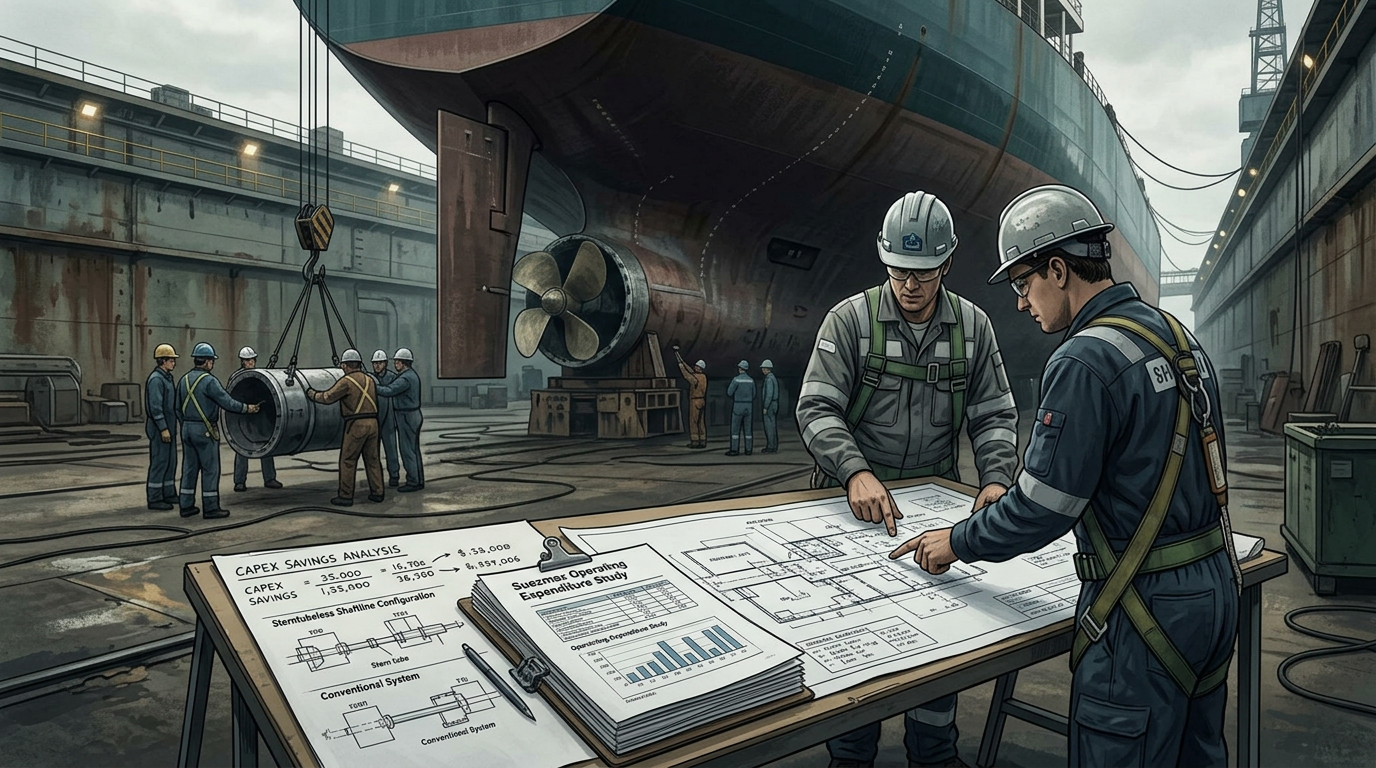
A recent evaluation reported by Hellenic Shipping News indicates that adopting the T-BOSS sterntubeless shaftline system offers capital expenditure advantages over traditional oil-lubricated setups. The analysis used data from a Suezmax crude carrier to determine how the technology impacts construction and long-term utility. Findings suggest that shipbuilders can reduce labor costs across multiple disciplines, including structural work, electrical systems, and piping, by opting for the seawater-lubricated polymer bearing design.
The study highlights significant gains in design flexibility due to a shortened propeller shaft, which created 660 cubic meters of additional cargo capacity in the reference vessel. This configuration allows naval architects to reposition main engines or integrate shaft generators to lower emissions. By removing the sterntube, shipyards can offer owners a vessel that provides more space for commercial use while simplifying the initial build process through a less complex shafting arrangement.
From an operational perspective, the research notes that eliminating oil lubrication saves approximately $33,000 in initial fluid costs and lowers annual expenses by avoiding expensive environmentally acceptable lubricants. The system features a dry inspection chamber, allowing engineers to service bearings without drydocking the ship or removing the propeller. Designers noted the technology allows them to "enhance layout flexibility at the early newbuild design stage" while meeting international environmental regulations.
Editorial Desk — Trade Flow Insight. Reporting and market notes compiled by the Trade Flow Insight editorial team.
Verwandte Beiträge

FMCSAs Elison äußert sich erneut zu Motus, weiterhin kein Datum für vollständige Reparatur
Chattanooga – Es ist noch nicht lange her – weniger als einen Monat –, dass Jesse Elison auf einer Branchenveranstaltung das Problem des angeschlagenen neuen Motus-Registrierungssystems ansprach. Der stellvertretende Administrator der Federal Motor Carrier Safety Administration (FMCSA) sprach am Montag auf dem Broker Compliance Symposium von FreightWaves, einer von zwei eintägigen Sitzungen, die als Auftakt zum größeren, am Dienstag beginnenden Future of Freight Festival hier dienen. Die wichtigste Nachricht seiner Präsentation war eigentlich keine: nachdem er Anfang Oktober bei der National M

Mexikanische Lkw-Fahrer starten landesweiten Streik wegen Autobahnsicherheit und steigender Kosten
Mexikanische Transportunternehmen haben am Montag einen unbefristeten landesweiten Streik begonnen, um gegen die Unsicherheit auf Autobahnen, Ladungsdiebstahl, Erpressung und steigende Betriebskosten zu protestieren. Demonstrationen sind in wichtigen Logistikzentren entlang der Grenze zwischen den USA und Mexiko geplant. Der von der National Chamber of Freight Transportation (CANACAR) und anderen Transportverbänden organisierte Streik ruft zu Protesten in ganz Mexiko auf, darunter in Nuevo Laredo, Reynosa, Monterrey, Tijuana und Mexiko-Stadt. Die Proteste könnten den Güterverkehr durch einige

Trump-Regierung stellt Seafood-Strategie zur Stärkung der US-Fischereiflotte und der heimischen Produktion vor
Die Trump-Regierung hat am Freitag ihre „America First Seafood Strategy“ vorgestellt. Der Plan sieht vor, die kommerzielle US-Fischereiindustrie durch regulatorische Reformen sowie Investitionen in Fischereifahrzeuge und Hafeninfrastruktur zu stärken.