
MARAD Activates SUNY Maritime Training Ship Empire State VII for Undisclosed National Mission
The U.S. Maritime Administration is activating the training ship Empire State VII for a 170-day federal mission, temporarily removing it from SUNY Maritime College.
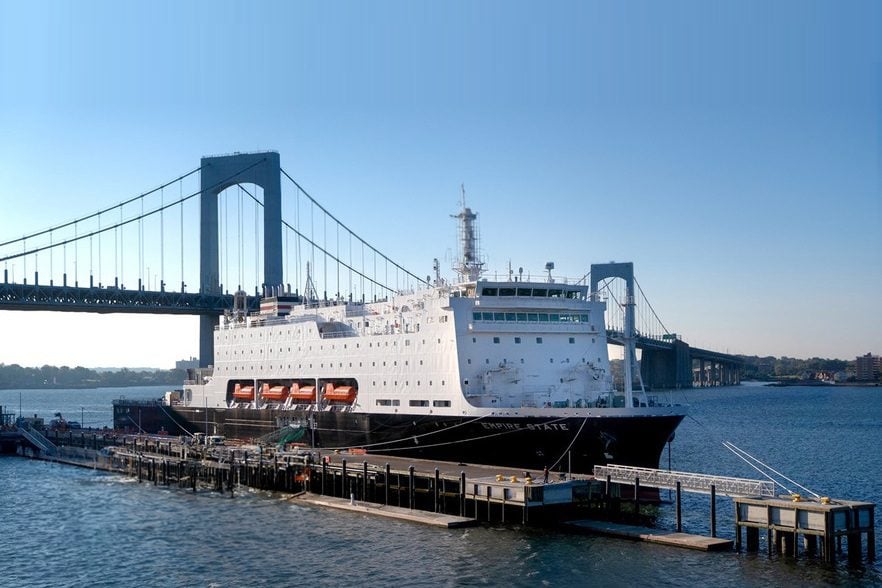
According to gCaptain, the U.S. Maritime Administration (MARAD) is preparing to deploy the SUNY Maritime College training vessel, Empire State VII, for a federal mission. The activation, scheduled to begin around September 1, is expected to last for approximately 170 days. This shift in service will likely take the ship away from the Bronx-based academy for a significant portion of the upcoming academic year.
MARAD Administrator Stephen M. Carmel issued a memorandum terminating the ship's current educational assignment to prepare it for service. While the exact destination and nature of the deployment remain undisclosed, the move coincides with increased military logistics needs in the Middle East. Some unconfirmed reports suggest the vessel may support operations at the Diego Garcia military base in the Indian Ocean.
This deployment represents the inaugural activation of a National Security Multi-Mission Vessel (NSMV). These government-owned ships were designed to function as modern training platforms while remaining available for national emergencies and humanitarian aid. The Empire State VII, delivered in late 2023, is the first of five such vessels built to replace aging ships at various state maritime academies.
SUNY Maritime President Rear Admiral John A. Okon stated that the college's current priority is preparing the vessel for federal use while managing the impact on student training. The ship is capable of housing up to 1,000 people during emergencies and features a helipad and roll-on/roll-off ramps. Despite these capabilities, the extended duration of this mission exceeds the typical short-term disaster responses previously supported by the academy.
Helena Marsh — Energy Markets Editor. Helena covers crude, refined products and the trading houses that move them, with a focus on price formation in the Mediterranean and Black Sea.
Verwandte Beiträge

FMCSAs Elison äußert sich erneut zu Motus, weiterhin kein Datum für vollständige Reparatur
Chattanooga – Es ist noch nicht lange her – weniger als einen Monat –, dass Jesse Elison auf einer Branchenveranstaltung das Problem des angeschlagenen neuen Motus-Registrierungssystems ansprach. Der stellvertretende Administrator der Federal Motor Carrier Safety Administration (FMCSA) sprach am Montag auf dem Broker Compliance Symposium von FreightWaves, einer von zwei eintägigen Sitzungen, die als Auftakt zum größeren, am Dienstag beginnenden Future of Freight Festival hier dienen. Die wichtigste Nachricht seiner Präsentation war eigentlich keine: nachdem er Anfang Oktober bei der National M

Mexikanische Lkw-Fahrer starten landesweiten Streik wegen Autobahnsicherheit und steigender Kosten
Mexikanische Transportunternehmen haben am Montag einen unbefristeten landesweiten Streik begonnen, um gegen die Unsicherheit auf Autobahnen, Ladungsdiebstahl, Erpressung und steigende Betriebskosten zu protestieren. Demonstrationen sind in wichtigen Logistikzentren entlang der Grenze zwischen den USA und Mexiko geplant. Der von der National Chamber of Freight Transportation (CANACAR) und anderen Transportverbänden organisierte Streik ruft zu Protesten in ganz Mexiko auf, darunter in Nuevo Laredo, Reynosa, Monterrey, Tijuana und Mexiko-Stadt. Die Proteste könnten den Güterverkehr durch einige

Trump-Regierung stellt Seafood-Strategie zur Stärkung der US-Fischereiflotte und der heimischen Produktion vor
Die Trump-Regierung hat am Freitag ihre „America First Seafood Strategy“ vorgestellt. Der Plan sieht vor, die kommerzielle US-Fischereiindustrie durch regulatorische Reformen sowie Investitionen in Fischereifahrzeuge und Hafeninfrastruktur zu stärken.