
China Accounting For 19% of Global Crude Oil Trade
China remains the top single-nation crude oil importer despite a significant year-on-year volume contraction, while the European Union has overtaken it as the world's largest buying bloc.
According to data from Banchero Costa published by Hellenic Shipping News, China accounted for 19 percent of the global seaborne crude oil trade during the first eight months of 2026. While it remains the leading single-country importer, the European Union has surpassed it in total volume, claiming a 22.6 percent share of the global market. Total Chinese arrivals for this period dropped to 261.7 million tonnes, representing a sharp 20 percent decline compared to the previous year.
The shipping data highlights a major shift in China's supply chains, with Brazil becoming the nation’s primary crude exporter at 14.1 percent of total volumes. Brazil now leads ahead of Russia, which holds a 13.6 percent share, and Saudi Arabia at 13.2 percent. Direct shipments from Russia saw a significant increase of over 31 percent, whereas volumes from traditional Middle Eastern suppliers like Saudi Arabia, Iraq, and Kuwait experienced substantial year-on-year decreases.
Logistical preferences in China continue to favor large-scale tonnage, with Very Large Crude Carriers (VLCCs) transporting 76.5 percent of the country's discharged oil. Aframax and Suezmax vessels handled the remaining 17.8 percent and 5 percent respectively. Major discharge hubs included Dongjiakou, which handled 28.9 million tonnes, and Ningbo/Zhoushan with 27.7 million tonnes. Other active terminals during this eight-month window included Lanshan, Beilun, and Dalian.
Beyond China, global import trends showed mixed results across major economies. The United States saw a 5.6 percent increase in imports, reaching 85.8 million tonnes. Conversely, several Asian markets recorded downturns; shipments to Japan fell by 15.1 percent, South Korean imports dropped by 11 percent, and the ASEAN region saw a 7.6 percent decline. India also experienced a marginal decrease of 1.5 percent in its seaborne crude arrivals during the same period.
Helena Marsh — Energy Markets Editor. Helena covers crude, refined products and the trading houses that move them, with a focus on price formation in the Mediterranean and Black Sea.
Related coverage
Brent Hits $114 as Houthi Attacks Threaten Saudi Energy Infrastructure
Crude oil prices were on course to book a sharp weekly gain, with Brent crude on track for gains of about $6 per barrel and WTI registering a much more modest tick higher, from around $99 per barrel on Monday to over $100 earlier today. At the time of writing, Brent crude was trading at $114.00 per barrel, and West Texas Intermediate was changing hands for $100.40 per barrel, as hostilities in the Middle East remain front-page news for oil traders. The focus, however, seems to be on Houthi attacks on Saudi infrastructure, including Aramco facilities.…

Why Trump Can't Afford to Lose The Rare Earth Race
For years, the West has searched for a technological escape hatch from rare earths. Engineers have developed new motor designs, alternative magnet chemistries, and materials that reduce or even eliminate the need for some critical minerals. Every time China tightens export controls, those efforts receive another burst of attention. They're worth pursuing. But they don't answer the question manufacturers have to solve today. Production capacity has become the number one scarce asset. That realization is driving one of the most ambitious industrial…
Middle East Chemicals Keep Their Cost Edge Despite Hormuz Crisis
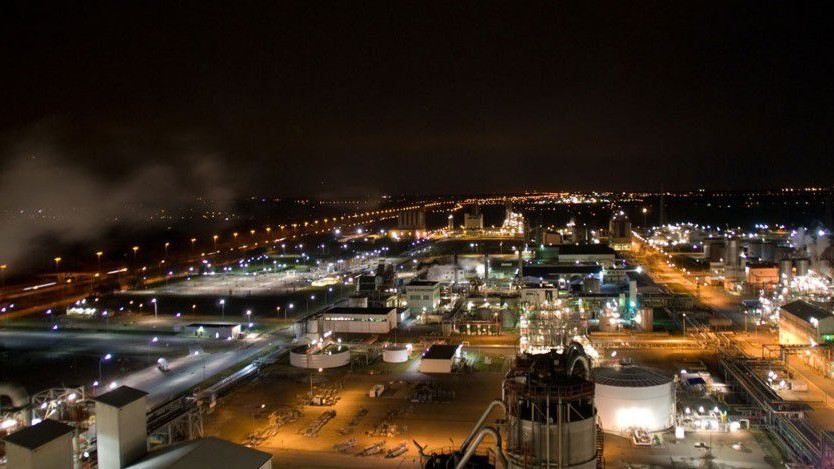
Despite the Iran war and the Hormuz crisis, the Middle East’s low-cost chemicals production is set to retain its long-term advantage over other regions. Near-term shifts in the sourcing of polymers are taking place due to the current constraints in the Persian Gulf’s industrial base, benefiting U.S. chemicals companies. But in the long run, the Middle East is likely to retain its buyers’ base because it still has the two levers to be competitive on the global market—an extensive production base and, most of all, low-cost…