
‘Quiet’ Hormuz crude flow, lack of products have split oil market: TotalEnergies CEO
TotalEnergies CEO Patrick Pouyanne details a bifurcated market where crude flow persists through Hormuz despite disruptions, even as global refined product supplies face significant tightening.
According to a report in Hellenic Shipping News, TotalEnergies CEO Patrick Pouyanne described a split oil market during the ONS conference in Stavanger. While crude oil continues to transit the Strait of Hormuz through discreet arrangements, refined products are facing greater obstacles. This dynamic has created a bearish environment for crude fundamentals while leaving the fuel market bullish due to significant supply shortages of refined liquids.
Pouyanne noted that crude exports from Iraq and Qatar are moving at a premium of roughly $10 per barrel to cover specialized shipping costs, though producers are pricing oil lower to ensure market access. However, refined products typically utilize smaller vessels, making the per-barrel transport costs prohibitive. Furthermore, the supply of products has been reduced by 6 million barrels per day, split equally between Hormuz disruptions and Ukrainian strikes on Russian refineries.
The executive acknowledged that the industry had previously overlooked the risks associated with the Strait of Hormuz as a single exit point. Consequently, TotalEnergies intends to diversify its infrastructure by investing in alternative export routes. These projects include a pipeline connecting Baghdad to Syria and a capacity expansion at the Fujairah terminal in the United Arab Emirates, which sits outside the vital maritime chokepoint.
Beyond oil, Pouyanne highlighted growing concerns in the natural gas sector. He warned that high prices linked to regional conflict are causing price-sensitive buyers of liquefied natural gas to lose confidence in the fuel. These consumers are increasingly considering coal as an alternative. Data indicates that benchmark LNG prices have surged by more than 120 percent since the onset of the current conflict in early 2026.
Helena Marsh — Energy Markets Editor. Helena covers crude, refined products and the trading houses that move them, with a focus on price formation in the Mediterranean and Black Sea.
Related coverage
Brent Hits $114 as Houthi Attacks Threaten Saudi Energy Infrastructure
Crude oil prices were on course to book a sharp weekly gain, with Brent crude on track for gains of about $6 per barrel and WTI registering a much more modest tick higher, from around $99 per barrel on Monday to over $100 earlier today. At the time of writing, Brent crude was trading at $114.00 per barrel, and West Texas Intermediate was changing hands for $100.40 per barrel, as hostilities in the Middle East remain front-page news for oil traders. The focus, however, seems to be on Houthi attacks on Saudi infrastructure, including Aramco facilities.…

Why Trump Can't Afford to Lose The Rare Earth Race
For years, the West has searched for a technological escape hatch from rare earths. Engineers have developed new motor designs, alternative magnet chemistries, and materials that reduce or even eliminate the need for some critical minerals. Every time China tightens export controls, those efforts receive another burst of attention. They're worth pursuing. But they don't answer the question manufacturers have to solve today. Production capacity has become the number one scarce asset. That realization is driving one of the most ambitious industrial…
Middle East Chemicals Keep Their Cost Edge Despite Hormuz Crisis
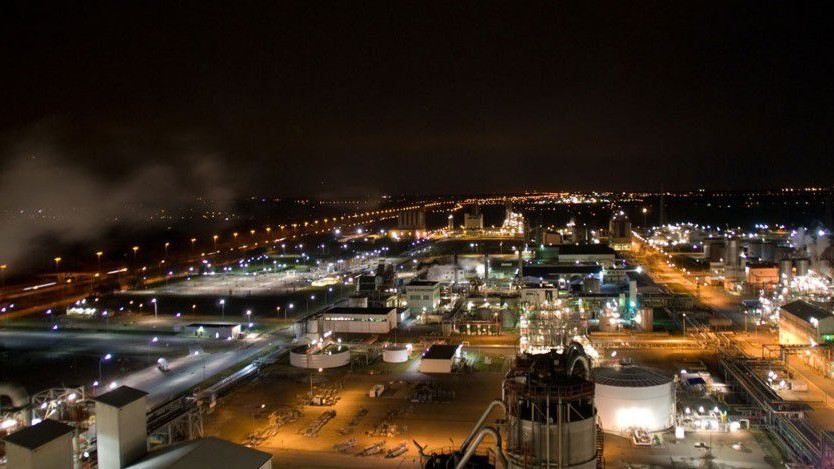
Despite the Iran war and the Hormuz crisis, the Middle East’s low-cost chemicals production is set to retain its long-term advantage over other regions. Near-term shifts in the sourcing of polymers are taking place due to the current constraints in the Persian Gulf’s industrial base, benefiting U.S. chemicals companies. But in the long run, the Middle East is likely to retain its buyers’ base because it still has the two levers to be competitive on the global market—an extensive production base and, most of all, low-cost…