
Borderlands Mexico: US takes 76% of vehicle exports as September shipments plunge
Mexico’s automotive exports and production fell sharply in September, despite the United States maintaining its position as the primary destination for light-vehicle shipments.
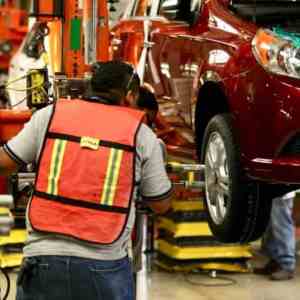
According to FreightWaves, the United States remains the dominant destination for Mexican automotive exports, accounting for 76.4% of all light vehicles shipped abroad during the first nine months of 2026. Data from Mexico’s National Institute of Statistics and Geography shows that 1.93 million units were sent to the U.S. out of a total 2.53 million exports. Other significant markets included Canada at 12.4% and Germany at 2.6%, though overall international shipments saw a 1.5% decrease compared to the previous year.
The automotive sector experienced a significant downturn in September, with worldwide exports dropping 11.9% to 277,369 units. Manufacturing output also contracted, falling 15.1% year-over-year to approximately 301,800 vehicles. These declines were led by major producers like General Motors and Nissan, which saw production dips of 27.1% and 26.3% respectively. Conversely, domestic demand within Mexico remained a bright spot, with new vehicle sales increasing by 7.9% during the same month.
In response to shifting logistics needs along the border, global provider DSV has opened a new facility in McAllen, Texas. This expansion is designed to support cross-border freight operations and supply chain management for manufacturers in northern Mexico, particularly the maquiladora sector. The new office joins DSV's existing network in Texas and California, providing services ranging from customs clearance to ground and ocean transportation for companies moving goods between the two nations.
Additionally, federal funding has been proposed to modernize freight movement through Laredo, Texas. Texas A&M International University is seeking $772,700 to develop a project utilizing artificial intelligence and digital modeling to analyze cargo activity. The initiative aims to identify infrastructure bottlenecks and improve the efficiency of one of the most active commercial gateways between the U.S. and Mexico. This technology-focused approach is intended to build logistics resilience and anticipate future transport disruptions.
Helena Marsh — Energy Markets Editor. Helena covers crude, refined products and the trading houses that move them, with a focus on price formation in the Mediterranean and Black Sea.
Related coverage

FMCSA’s Elison addresses Motus again, still no date on full repair
Chattanooga–It hasn’t been that long–less than a month–since Jesse Elison spoke to an industry event and addressed the issue of the beleaguered new Motus registration system. The deputy administrator of the Federal Motor Carrier Safety Administration (FMCSA) spoke Monday at FreightWaves’ Broker Compliance Symposium, one of two one-day sessions that serve as a prelude to the larger Future of Freight Festival here that begins Tuesday The biggest news in his presentation was really no news: after saying at the National Motor Freight Traffic Association in early October that FMCSA was “weeks away”

Mexican truckers launch national strike over highway security, rising costs
Mexican trucking companies launched an indefinite nationwide strike Monday protesting highway insecurity, cargo theft, extortion and rising operating costs, with demonstrations planned in major freight hubs along the U.S.-Mexico border. The strike, organized by the National Chamber of Freight Transportation (CANACAR) and other trucking organizations, calls for demonstrations across Mexico, including Nuevo Laredo, Reynosa, Monterrey, Tijuana and Mexico City. The protests could disrupt freight transportation through some of North America’s busiest commercial corridors, particularly in Nuevo Lare

Trump Administration Unveils Seafood Strategy to Boost U.S. Fishing Fleet and Domestic Production
The Trump administration on Friday unveiled its America First Seafood Strategy, outlining plans to strengthen the U.S. commercial fishing industry through regulatory reform, investment in fishing vessels and shoreside infrastructure,...