
In-Depth Suezmax Study Makes Capex Case For T-Boss® Sterntubeless Shaftline System
A technical assessment of a Suezmax tanker indicates that a sterntubeless shaftline system reduces installation labor and increases potential cargo volume.
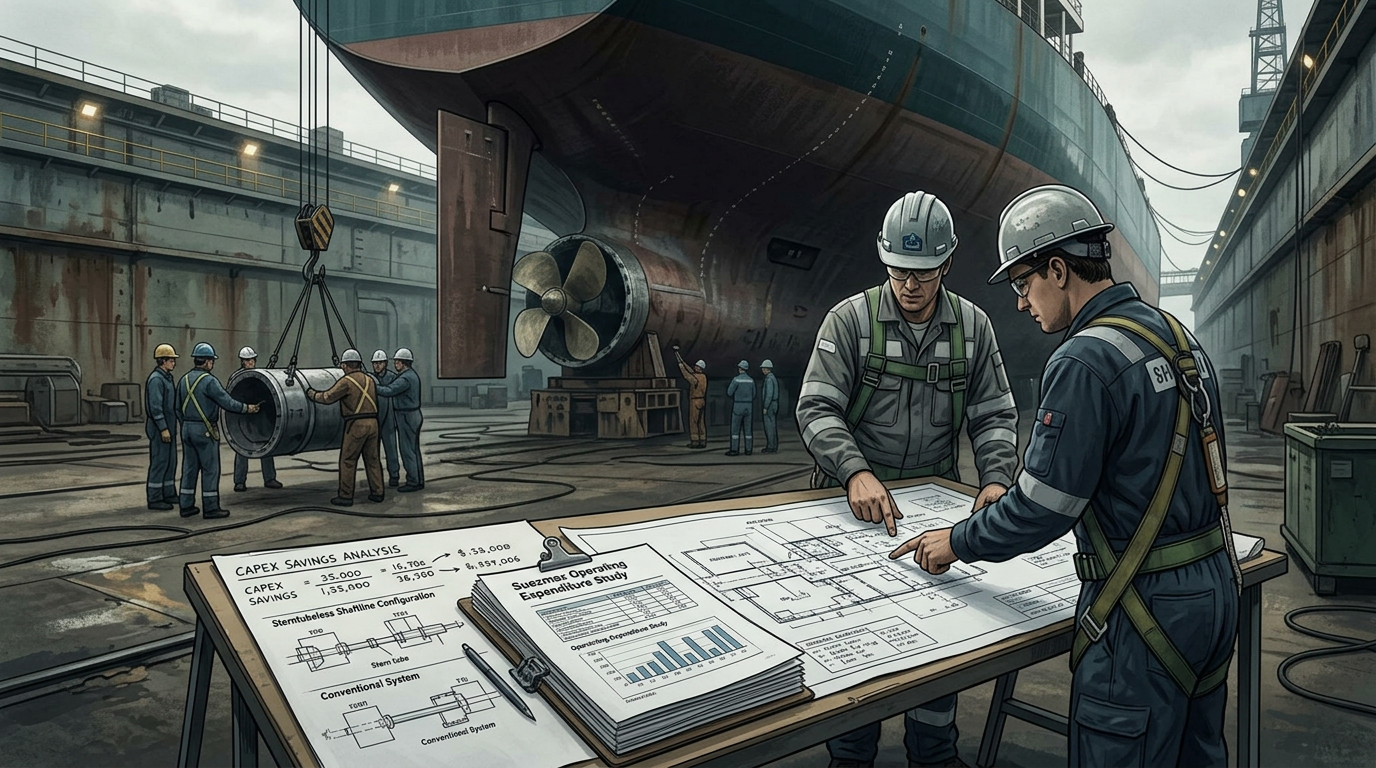
A recent evaluation reported by Hellenic Shipping News indicates that adopting the T-BOSS sterntubeless shaftline system offers capital expenditure advantages over traditional oil-lubricated setups. The analysis used data from a Suezmax crude carrier to determine how the technology impacts construction and long-term utility. Findings suggest that shipbuilders can reduce labor costs across multiple disciplines, including structural work, electrical systems, and piping, by opting for the seawater-lubricated polymer bearing design.
The study highlights significant gains in design flexibility due to a shortened propeller shaft, which created 660 cubic meters of additional cargo capacity in the reference vessel. This configuration allows naval architects to reposition main engines or integrate shaft generators to lower emissions. By removing the sterntube, shipyards can offer owners a vessel that provides more space for commercial use while simplifying the initial build process through a less complex shafting arrangement.
From an operational perspective, the research notes that eliminating oil lubrication saves approximately $33,000 in initial fluid costs and lowers annual expenses by avoiding expensive environmentally acceptable lubricants. The system features a dry inspection chamber, allowing engineers to service bearings without drydocking the ship or removing the propeller. Designers noted the technology allows them to "enhance layout flexibility at the early newbuild design stage" while meeting international environmental regulations.
Editorial Desk — Trade Flow Insight. Reporting and market notes compiled by the Trade Flow Insight editorial team.
Related coverage

FMCSA’s Elison addresses Motus again, still no date on full repair
Chattanooga–It hasn’t been that long–less than a month–since Jesse Elison spoke to an industry event and addressed the issue of the beleaguered new Motus registration system. The deputy administrator of the Federal Motor Carrier Safety Administration (FMCSA) spoke Monday at FreightWaves’ Broker Compliance Symposium, one of two one-day sessions that serve as a prelude to the larger Future of Freight Festival here that begins Tuesday The biggest news in his presentation was really no news: after saying at the National Motor Freight Traffic Association in early October that FMCSA was “weeks away”

Mexican truckers launch national strike over highway security, rising costs
Mexican trucking companies launched an indefinite nationwide strike Monday protesting highway insecurity, cargo theft, extortion and rising operating costs, with demonstrations planned in major freight hubs along the U.S.-Mexico border. The strike, organized by the National Chamber of Freight Transportation (CANACAR) and other trucking organizations, calls for demonstrations across Mexico, including Nuevo Laredo, Reynosa, Monterrey, Tijuana and Mexico City. The protests could disrupt freight transportation through some of North America’s busiest commercial corridors, particularly in Nuevo Lare

Trump Administration Unveils Seafood Strategy to Boost U.S. Fishing Fleet and Domestic Production
The Trump administration on Friday unveiled its America First Seafood Strategy, outlining plans to strengthen the U.S. commercial fishing industry through regulatory reform, investment in fishing vessels and shoreside infrastructure,...