
MARAD Activates SUNY Maritime Training Ship Empire State VII for Undisclosed National Mission
The U.S. Maritime Administration is activating the training ship Empire State VII for a 170-day federal mission, temporarily removing it from SUNY Maritime College.
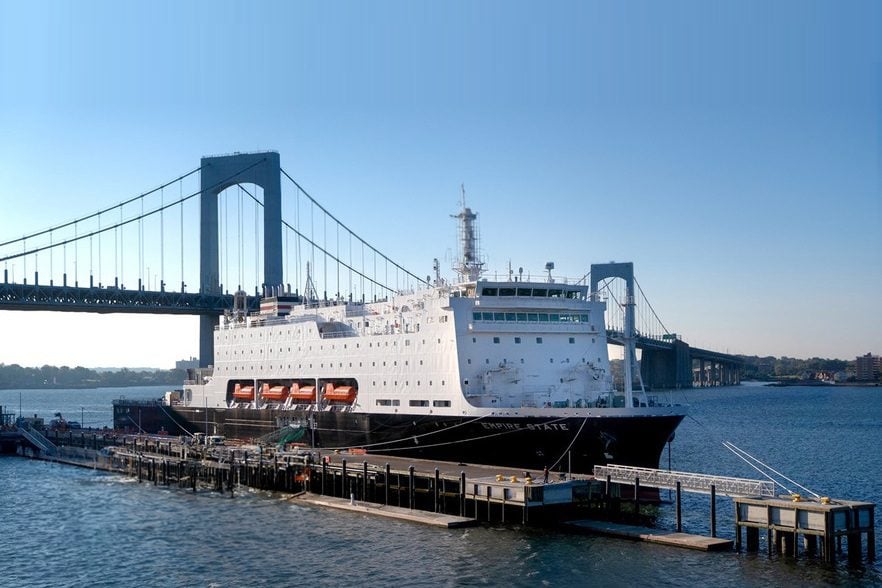
According to gCaptain, the U.S. Maritime Administration (MARAD) is preparing to deploy the SUNY Maritime College training vessel, Empire State VII, for a federal mission. The activation, scheduled to begin around September 1, is expected to last for approximately 170 days. This shift in service will likely take the ship away from the Bronx-based academy for a significant portion of the upcoming academic year.
MARAD Administrator Stephen M. Carmel issued a memorandum terminating the ship's current educational assignment to prepare it for service. While the exact destination and nature of the deployment remain undisclosed, the move coincides with increased military logistics needs in the Middle East. Some unconfirmed reports suggest the vessel may support operations at the Diego Garcia military base in the Indian Ocean.
This deployment represents the inaugural activation of a National Security Multi-Mission Vessel (NSMV). These government-owned ships were designed to function as modern training platforms while remaining available for national emergencies and humanitarian aid. The Empire State VII, delivered in late 2023, is the first of five such vessels built to replace aging ships at various state maritime academies.
SUNY Maritime President Rear Admiral John A. Okon stated that the college's current priority is preparing the vessel for federal use while managing the impact on student training. The ship is capable of housing up to 1,000 people during emergencies and features a helipad and roll-on/roll-off ramps. Despite these capabilities, the extended duration of this mission exceeds the typical short-term disaster responses previously supported by the academy.
Helena Marsh — Energy Markets Editor. Helena covers crude, refined products and the trading houses that move them, with a focus on price formation in the Mediterranean and Black Sea.
Related coverage

FMCSA’s Elison addresses Motus again, still no date on full repair
Chattanooga–It hasn’t been that long–less than a month–since Jesse Elison spoke to an industry event and addressed the issue of the beleaguered new Motus registration system. The deputy administrator of the Federal Motor Carrier Safety Administration (FMCSA) spoke Monday at FreightWaves’ Broker Compliance Symposium, one of two one-day sessions that serve as a prelude to the larger Future of Freight Festival here that begins Tuesday The biggest news in his presentation was really no news: after saying at the National Motor Freight Traffic Association in early October that FMCSA was “weeks away”

Mexican truckers launch national strike over highway security, rising costs
Mexican trucking companies launched an indefinite nationwide strike Monday protesting highway insecurity, cargo theft, extortion and rising operating costs, with demonstrations planned in major freight hubs along the U.S.-Mexico border. The strike, organized by the National Chamber of Freight Transportation (CANACAR) and other trucking organizations, calls for demonstrations across Mexico, including Nuevo Laredo, Reynosa, Monterrey, Tijuana and Mexico City. The protests could disrupt freight transportation through some of North America’s busiest commercial corridors, particularly in Nuevo Lare

Trump Administration Unveils Seafood Strategy to Boost U.S. Fishing Fleet and Domestic Production
The Trump administration on Friday unveiled its America First Seafood Strategy, outlining plans to strengthen the U.S. commercial fishing industry through regulatory reform, investment in fishing vessels and shoreside infrastructure,...