
30-year-old North Sea project gets gas boost with early start to its next chapter
Equinor and its partners have launched production from the Troll Phase 3 stage 2 project ahead of schedule, facilitating the delivery of 55 billion cubic meters of gas to European markets.
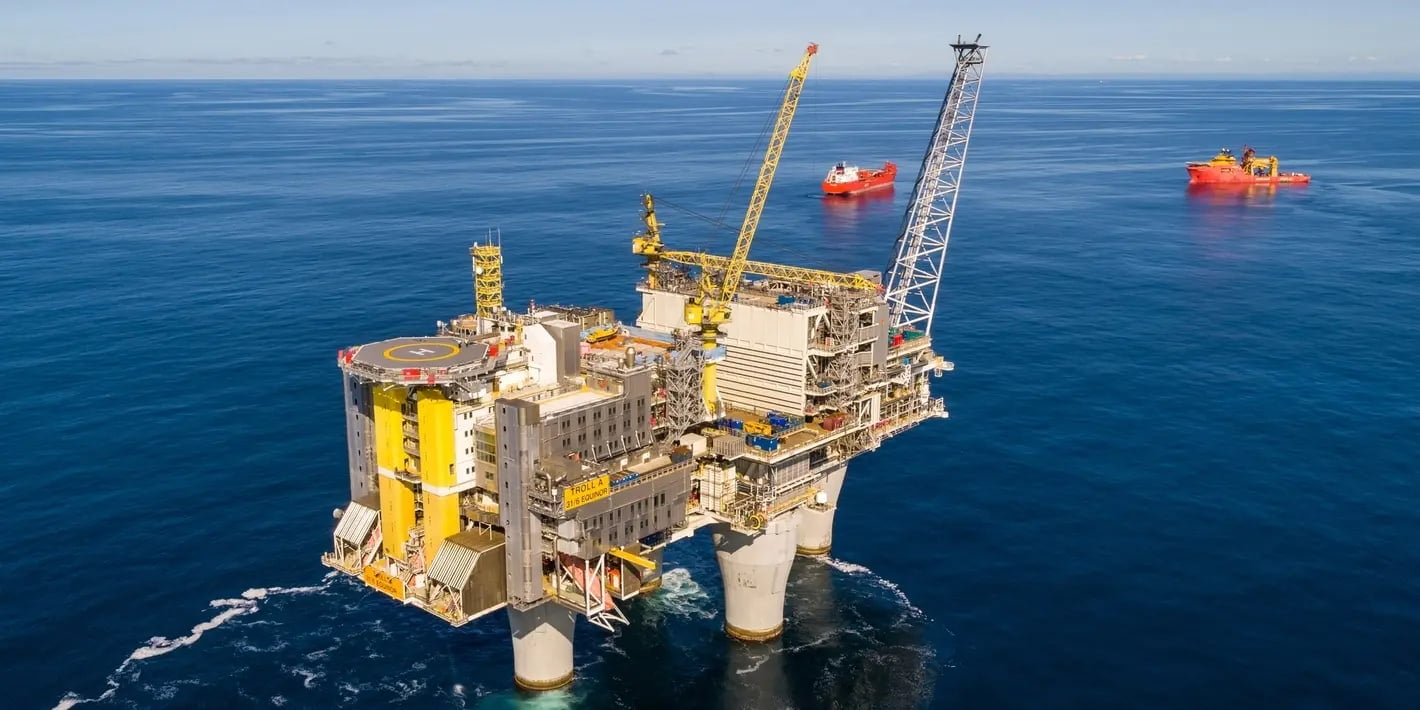
The Troll Phase 3 stage 2 subsea project commenced production on August 22, 2026, reaching operational status earlier than the year-end target. According to Offshore Energy, the expansion aims to speed up the extraction of 55 billion cubic meters of gas from the Troll West reservoir. This development utilizes the existing Troll A platform and the Kollsnes processing plant, the latter of which is celebrating its 30th anniversary this year.
Project execution costs totaled approximately $1.32 billion, finishing several hundred million Norwegian kroner under the original budget. Operators attributed the early start and savings to efficient marine logistics and a drilling campaign that concluded 25 percent faster than anticipated. The infrastructure relies on standardized subsea designs and shore-based electricity to maintain high export volumes while minimizing the carbon footprint of production.
Equinor serves as the operator for the Troll partnership alongside Petoro, A/S Norske Shell, TotalEnergies, and ConocoPhillips. Lill Harriet Brusdal, a vice president for the project, stated that "Troll is the backbone of Norwegian gas exports to Europe." The field currently holds nearly 40 percent of the gas reserves on the Norwegian Continental Shelf and satisfies roughly 10 percent of European gas demand.
Editorial Desk — Trade Flow Insight. Reporting and market notes compiled by the Trade Flow Insight editorial team.
Cobertura relacionada
Europa se prepara para una crisis energética invernal ante las bajas reservas de gas
Tras meses de precios energéticos elevados, Europa puede esperar que los costos del combustible sigan subiendo durante los meses de invierno a medida que crece la demanda. Se espera que las restricciones continuas al comercio de energía y las amenazas a la infraestructura energética en todo Oriente Medio limiten los suministros mundiales y sigan impulsando los precios al alza, golpeando duramente a los consumidores a menos que los gobiernos intervengan. Se estima que la Unión Europea (UE) ha pagado 100.000 millones de euros adicionales en petróleo y gas en lo que va de año, lo que ha llevado a
El petróleo avanza en medio de riesgos de guerra y huracanes
Los precios del petróleo subieron ligeramente a medida que los ataques a buques cisterna en Oriente Medio y el huracán Isaias aumentaron las preocupaciones sobre el suministro.

Australia publicará el plan definitivo para mantener más GNL en el mercado interno
Australia está lista para revelar la versión final de un controvertido plan para obligar a los productores de gas natural licuado a reservar hasta una quinta parte de su producción para compradores locales.