
Benchmark diesel price is now highest since war began
Retail diesel surcharges reach a new peak following sustained price hikes, despite a recent sharp decline in commodity exchange values.
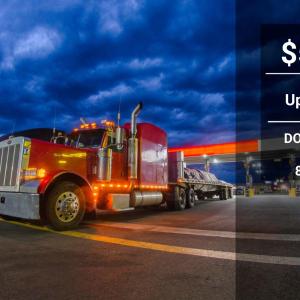
The benchmark retail diesel price used for fuel surcharges has climbed to its highest point since the start of military operations against Iran in early March. According to FreightWaves, the latest weekly average published by the Department of Energy reached $5.652 per gallon on Tuesday. This figure surpasses the previous record set in early April and follows a period where ultra low sulfur diesel prices rose during twelve out of thirteen trading sessions.
While retail costs peaked, the commodity exchange saw a significant reversal early this week as futures prices for ultra low sulfur diesel dropped more than 22 cents. This downward shift coincided with remarks from U.S. Treasury Secretary Scott Bessent, who indicated the current administration would prioritize economic sanctions over further military engagement. These market dynamics highlight a divergence between diesel and gasoline, which has seen much flatter price movement over the last month.
Supply concerns continue to impact the market, driven by refinery disruptions in Russia and reduced output from Middle Eastern crude grades. There is also significant volatility in data regarding oil transit through the Strait of Hormuz. Vortexa economist David Wech noted that daily flow volumes vary greatly, stating that "on the average of the last month, we see six to seven million barrels per day" passing through the region.
Editorial Desk — Trade Flow Insight. Reporting and market notes compiled by the Trade Flow Insight editorial team.
Related coverage

Brent Back Above $100 as Houthis Hit Saudi Infrastructure
Crude oil prices, which dipped on Tuesday, reversed their direction, with Brent ticking above $100 again earlier today following reports of fresh Houthi attacks on Saudi energy infrastructure. At the time of writing, Brent crude was trading at $101.49 per barrel and West Texas Intermediate was changing hands for $90.14 per barrel, despite a statement from Saudi Arabia’s energy minister, Prince Abdulaziz bin Salman, who said Tuesday the kingdom’s oil flows via the Rast-West pipeline had rebounded to 5.8 million barrels daily. The statement…

Iranian Oil Starts Flowing to Tajikistan Despite U.S. Sanctions Risk
Tajikistan announced that it is now receiving oil and petroleum products from Iran, opening a potential new energy source for a country whose fuel supplies have long been dominated by Russia. The deliveries began in late August, Tajikistan's Energy and Water Resources Ministry told the Asia-Plus news agency, following talks between the two countries on expanding cooperation in the oil and gas sector. The ministry has not disclosed the volume of the shipments, their commercial terms, or how the oil and petroleum products were transported to Tajikistan.…

Iran’s Disappearing Oil Is Becoming Everyone’s Problem
Iranian oil is disappearing from the market just as its biggest buyer returns for more. China’s recovering crude demand is colliding with the loss of a supplier that sustained its independent refiners through the crisis, forcing them to compete for increasingly expensive alternatives. The consequences reach beyond China: every replacement barrel tightens supplies for other buyers, while Tehran faces a growing incentive to disrupt the Strait of Hormuz, which is now carrying an unexpectedly strong 13 million barrels a day (just 5 million below…