
30-year-old North Sea project gets gas boost with early start to its next chapter
Equinor and its partners have launched production from the Troll Phase 3 stage 2 project ahead of schedule, facilitating the delivery of 55 billion cubic meters of gas to European markets.
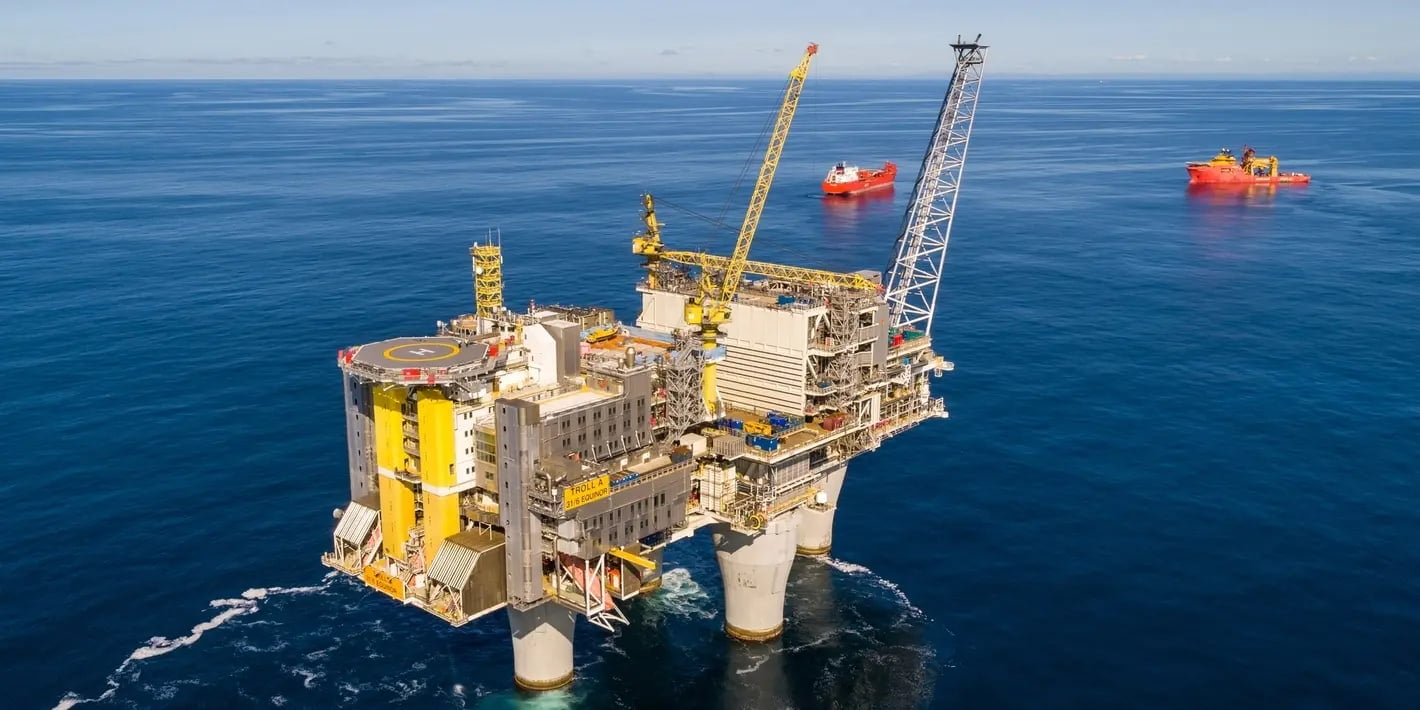
The Troll Phase 3 stage 2 subsea project commenced production on August 22, 2026, reaching operational status earlier than the year-end target. According to Offshore Energy, the expansion aims to speed up the extraction of 55 billion cubic meters of gas from the Troll West reservoir. This development utilizes the existing Troll A platform and the Kollsnes processing plant, the latter of which is celebrating its 30th anniversary this year.
Project execution costs totaled approximately $1.32 billion, finishing several hundred million Norwegian kroner under the original budget. Operators attributed the early start and savings to efficient marine logistics and a drilling campaign that concluded 25 percent faster than anticipated. The infrastructure relies on standardized subsea designs and shore-based electricity to maintain high export volumes while minimizing the carbon footprint of production.
Equinor serves as the operator for the Troll partnership alongside Petoro, A/S Norske Shell, TotalEnergies, and ConocoPhillips. Lill Harriet Brusdal, a vice president for the project, stated that "Troll is the backbone of Norwegian gas exports to Europe." The field currently holds nearly 40 percent of the gas reserves on the Norwegian Continental Shelf and satisfies roughly 10 percent of European gas demand.
Editorial Desk — Trade Flow Insight. Reporting and market notes compiled by the Trade Flow Insight editorial team.
Articles liés
L'Europe se prépare à une crise énergétique hivernale alors que les réserves de gaz s'amenuisent
Après des mois de prix de l'énergie élevés, l'Europe peut s'attendre à une poursuite de la hausse des coûts des carburants durant les mois d'hiver avec l'augmentation de la demande. Les contraintes persistantes sur le commerce de l'énergie et les menaces pesant sur les infrastructures énergétiques au Moyen-Orient devraient limiter les approvisionnements mondiaux et continuer à faire grimper les prix, frappant durement les consommateurs à moins que les gouvernements n'interviennent. L'Union européenne (UE) aurait payé 100 milliards d'euros supplémentaires pour le pétrole et le gaz depuis le déb
Le pétrole progresse sur fond de risques liés à la guerre et aux ouragans
Les prix du pétrole ont légèrement progressé alors que les attaques contre des pétroliers au Moyen-Orient et l'ouragan Isaias ont accru les inquiétudes concernant l'approvisionnement.
L'Australie sur le point de publier son plan définitif pour conserver davantage de GNL sur le marché intérieur
L'Australie est sur le point de dévoiler la version finale d'un plan controversé visant à contraindre les producteurs de gaz naturel liquéfié à réserver jusqu'à un cinquième de leur production aux acheteurs locaux.