
Ecuador Says US Sinkings Of Vessels Were Part Of Joint Anti-Drug Probe
Ecuadorian officials have defended the U.S. Navy's destruction of three regional vessels following claims they were providing logistical support to international drug trafficking cartels.
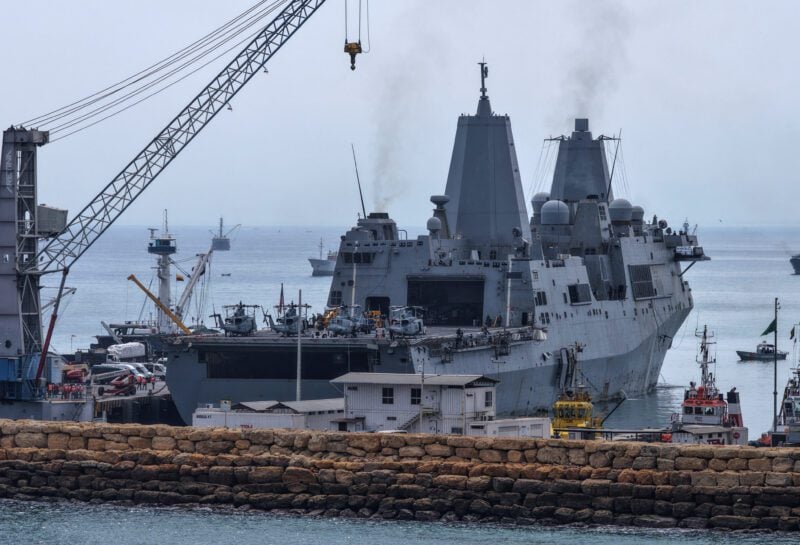
The government of Ecuador has formally supported the recent interception and sinking of three domestic vessels by United States forces, according to a report from gCaptain. Officials stated the operations were the result of a coordinated bilateral investigation aimed at dismantling the logistical networks used by criminal organizations to move narcotics through the eastern Pacific toward North American markets.
Interior Minister John Reimberg explained to local media that the targeted boats functioned as mobile refueling stations. These maritime outposts are designed to extend the range of high-speed vessels transporting illicit cargo. The U.S. Southern Command reinforced this assessment, alleging the vessels were specifically assisting the Los Choneros gang. Military footage released recently showed operatives boarding a ship before its tactical destruction at sea.
While the government maintains the legality of the mission, family members of the detained mariners have challenged the official narrative. One relative claimed the crews were engaged in legitimate fishing activities and that no narcotics were discovered onboard during the boarding. These individuals further alleged that the interception occurred within Ecuadorian territorial waters rather than in international seas as suggested by military authorities.
Data provided by the Ecuadorian Navy confirms that dozens of crew members from vessels named Conquista II and OM2 have been returned to the port of Manta. In total, 36 individuals were accounted for following the operations. The incident highlights ongoing tensions regarding the use of lethal force during maritime interdiction efforts and the broader U.S. strategy to combat drug trafficking in Latin American waters.
Helena Marsh — Energy Markets Editor. Helena covers crude, refined products and the trading houses that move them, with a focus on price formation in the Mediterranean and Black Sea.
Articles liés

Elison de la FMCSA s'exprime de nouveau sur Motus, toujours aucune date pour une réparation complète
Chattanooga – Cela fait peu de temps – moins d'un mois – que Jesse Elison s'est adressé à un événement du secteur et a abordé la question du nouveau système d'enregistrement en difficulté Motus. L'administrateur adjoint de la Federal Motor Carrier Safety Administration (FMCSA) s'est exprimé lundi lors du Broker Compliance Symposium de FreightWaves, l'une des deux sessions d'une journée qui servent de prélude au plus grand Future of Freight Festival qui débute ici mardi. La plus grande nouvelle de sa présentation n'était en réalité pas une nouvelle : après avoir déclaré à la National Motor Frei

Les camionneurs mexicains lancent une grève nationale en raison de l'insécurité routière et de la hausse des coûts
Les entreprises de transport routier mexicaines ont entamé lundi une grève nationale illimitée pour protester contre l'insécurité sur les autoroutes, les vols de marchandises, l'extorsion et la hausse des coûts d'exploitation, avec des manifestations prévues dans les principaux centres de fret le long de la frontière entre le Mexique et les États-Unis. La grève, organisée par la National Chamber of Freight Transportation (CANACAR) et d'autres organisations de transporteurs, appelle à des manifestations à travers le Mexique, notamment à Nuevo Laredo, Reynosa, Monterrey, Tijuana et Mexico. Les p

L'administration Trump dévoile une stratégie halieutique pour stimuler la flotte et la production américaines
L'administration Trump a dévoilé vendredi l'America First Seafood Strategy, exposant ses projets visant à renforcer l'industrie de la pêche commerciale américaine par la réforme réglementaire, l'investissement dans les navires de pêche et les infrastructures portuaires,...