
Freight Market Health: What 13.57% Rejections Mean
Truckload tender rejection rates have settled at 13.57%, signaling a stabilizing market that experts suggest represents a new baseline for tightness ahead of fourth-quarter volatility.
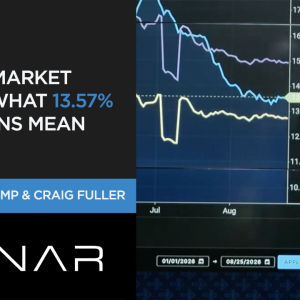
According to FreightWaves, truckload tender rejections have stabilized at approximately 13.57% following a seasonal peak that exceeded 17.5% in early July. This current level is being characterized by industry analysts as a healthy baseline rather than a sign of market fatigue. Data indicates a significant recovery from the start of the year, when rejection rates bottomed out at roughly 6% in January, suggesting the market has established a new floor for the current cycle.
During a recent SONAR data review, Craig Fuller noted that the threshold for market tightness has shifted. While brokers previously viewed an 8% rejection rate as a sign of a constrained market, that sentiment now applies to levels between 12% and 13%. At these current rates, intermediaries are seeing an increase in leverage with shippers. Despite the apparent stability, analysts expect upward pressure to return as the industry enters the final months of the year.
Market experts point to several seasonal factors that could drive rejection rates higher through the autumn. These include back-to-school shipping demands, a late Labor Day, and efforts by retailers to move West Coast imports early to mitigate inventory risks. Additionally, the industry is monitoring the impact of regulatory enforcement regarding driver licensing and English proficiency, which may affect year-over-year comparisons as the market approaches the one-year anniversary of these crackdowns.
Spot rates are already reflecting these shifting dynamics, showing a 7% increase in late August that recovered earlier monthly losses. Currently, accepted truckload volumes and total tender volumes are moving synchronously, creating a predictable environment for logistics planning. While carriers are successfully securing rate increases, shippers have not yet experienced significant service disruptions, providing a brief window for participants to balance their spot and contract freight allocations.
Editorial Desk — Trade Flow Insight. Reporting and market notes compiled by the Trade Flow Insight editorial team.
Articles liés

Elison de la FMCSA s'exprime de nouveau sur Motus, toujours aucune date pour une réparation complète
Chattanooga – Cela fait peu de temps – moins d'un mois – que Jesse Elison s'est adressé à un événement du secteur et a abordé la question du nouveau système d'enregistrement en difficulté Motus. L'administrateur adjoint de la Federal Motor Carrier Safety Administration (FMCSA) s'est exprimé lundi lors du Broker Compliance Symposium de FreightWaves, l'une des deux sessions d'une journée qui servent de prélude au plus grand Future of Freight Festival qui débute ici mardi. La plus grande nouvelle de sa présentation n'était en réalité pas une nouvelle : après avoir déclaré à la National Motor Frei

Les camionneurs mexicains lancent une grève nationale en raison de l'insécurité routière et de la hausse des coûts
Les entreprises de transport routier mexicaines ont entamé lundi une grève nationale illimitée pour protester contre l'insécurité sur les autoroutes, les vols de marchandises, l'extorsion et la hausse des coûts d'exploitation, avec des manifestations prévues dans les principaux centres de fret le long de la frontière entre le Mexique et les États-Unis. La grève, organisée par la National Chamber of Freight Transportation (CANACAR) et d'autres organisations de transporteurs, appelle à des manifestations à travers le Mexique, notamment à Nuevo Laredo, Reynosa, Monterrey, Tijuana et Mexico. Les p

L'administration Trump dévoile une stratégie halieutique pour stimuler la flotte et la production américaines
L'administration Trump a dévoilé vendredi l'America First Seafood Strategy, exposant ses projets visant à renforcer l'industrie de la pêche commerciale américaine par la réforme réglementaire, l'investissement dans les navires de pêche et les infrastructures portuaires,...