
Google Maps Just Launched Truck-Aware Routing That Knows About Low Bridges and Weight Limits. Here Is What It Means, and What It Does Not.
Google Maps Platform has released Large Vehicle Routing to help commercial fleets avoid low bridges and weight-restricted roads through specialized developer tools.
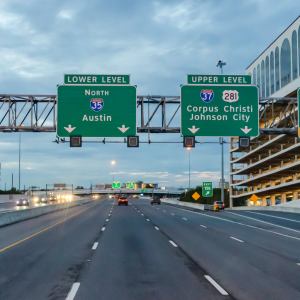
Google has launched Large Vehicle Routing to address the common industry problem of commercial drivers being misdirected by consumer-grade navigation apps. According to FreightWaves, this new technology is designed to prevent accidents such as bridge strikes and weight limit violations. By utilizing specialized road data, the system helps large vehicles navigate paths that are physically safe and legally compliant for their specific dimensions.
The technology is currently available as a suite of developer tools, including the Routes API and a Navigation SDK. Rather than a standalone mobile app for consumers, these components allow software companies to integrate truck-specific navigation into their own professional fleet management platforms. This allows for the creation of precise vehicle profiles that account for a truck's height, width, weight, axle count, and any hazardous materials on board.
The system provides updated arrival estimates based on observed truck speeds rather than passenger car traffic patterns. It also features a "route token" designed to synchronize the directions viewed by office dispatchers with what the driver sees on their in-cab display. Google Maps Platform product manager Mohit Moondra described the offering as a version of the company's routing technology built specifically for the requirements of commercial buses and trucks.
While the entry of a major technology firm into the trucking sector signals increased competition, the tools are intended to support rather than replace driver intuition. The new APIs aim to reduce the manual checks often required by fleet managers while improving overall safety. However, the practical benefits for most operators will depend on how quickly third-party telematics and dispatch software providers choose to incorporate these new Google capabilities into their products.
Editorial Desk — Trade Flow Insight. Reporting and market notes compiled by the Trade Flow Insight editorial team.
Articles liés

Elison de la FMCSA s'exprime de nouveau sur Motus, toujours aucune date pour une réparation complète
Chattanooga – Cela fait peu de temps – moins d'un mois – que Jesse Elison s'est adressé à un événement du secteur et a abordé la question du nouveau système d'enregistrement en difficulté Motus. L'administrateur adjoint de la Federal Motor Carrier Safety Administration (FMCSA) s'est exprimé lundi lors du Broker Compliance Symposium de FreightWaves, l'une des deux sessions d'une journée qui servent de prélude au plus grand Future of Freight Festival qui débute ici mardi. La plus grande nouvelle de sa présentation n'était en réalité pas une nouvelle : après avoir déclaré à la National Motor Frei

Les camionneurs mexicains lancent une grève nationale en raison de l'insécurité routière et de la hausse des coûts
Les entreprises de transport routier mexicaines ont entamé lundi une grève nationale illimitée pour protester contre l'insécurité sur les autoroutes, les vols de marchandises, l'extorsion et la hausse des coûts d'exploitation, avec des manifestations prévues dans les principaux centres de fret le long de la frontière entre le Mexique et les États-Unis. La grève, organisée par la National Chamber of Freight Transportation (CANACAR) et d'autres organisations de transporteurs, appelle à des manifestations à travers le Mexique, notamment à Nuevo Laredo, Reynosa, Monterrey, Tijuana et Mexico. Les p

L'administration Trump dévoile une stratégie halieutique pour stimuler la flotte et la production américaines
L'administration Trump a dévoilé vendredi l'America First Seafood Strategy, exposant ses projets visant à renforcer l'industrie de la pêche commerciale américaine par la réforme réglementaire, l'investissement dans les navires de pêche et les infrastructures portuaires,...