
Iran’s bottleneck is Hormuz, not the buyer
Iranian crude supplies in Asian waters reached 46 million barrels following a brief U.S. sanctions waiver, as storage levels defied broader regional trends.
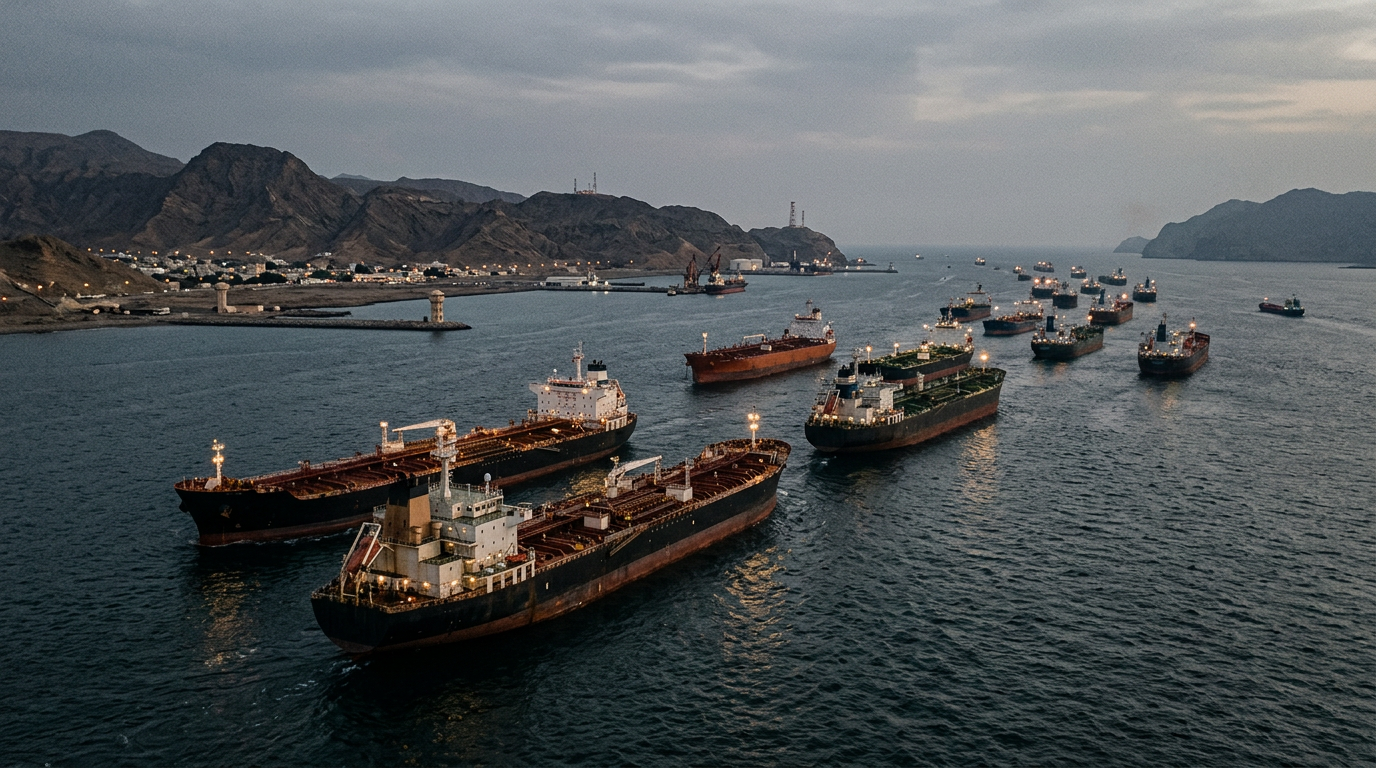
Iranian crude oil volumes sitting in Asian maritime zones have returned to peak levels, totaling 46 million barrels by the end of July. According to Hellenic Shipping News, this accumulation occurred despite a 23.6% decline in total crude on the water across the region between January and July. The surge was accelerated by a three-week sanctions waiver that finalized a refill process already underway since February, contrasting sharply with broader market contractions.
Logistical data indicates that the primary constraint for these supplies is the Strait of Hormuz rather than a lack of market demand. Currently, 76.9 million barrels of Iranian oil are situated across the Gulf region, distributed between the Gulf of Oman and areas west of the strait. Large vessels, particularly Very Large Crude Carriers, dominate the fleet west of the bottleneck, carrying parcels that average 1.77 million barrels as they wait for transit.
Recent shifts in the floating-to-transit ratio suggest that available barrels are being processed as ship-to-ship redistributions rather than static bulk storage. In August, volumes held within Chinese zones dropped by 45%, signaling the first significant discharge of the year. Analysts expect refiners to continue drawing down these commercial inventories over the coming months to bridge feedstock gaps, especially since these nearby supplies can reach Chinese berths in roughly one week.
Editorial Desk — Trade Flow Insight. Reporting and market notes compiled by the Trade Flow Insight editorial team.
Articles liés

Elison de la FMCSA s'exprime de nouveau sur Motus, toujours aucune date pour une réparation complète
Chattanooga – Cela fait peu de temps – moins d'un mois – que Jesse Elison s'est adressé à un événement du secteur et a abordé la question du nouveau système d'enregistrement en difficulté Motus. L'administrateur adjoint de la Federal Motor Carrier Safety Administration (FMCSA) s'est exprimé lundi lors du Broker Compliance Symposium de FreightWaves, l'une des deux sessions d'une journée qui servent de prélude au plus grand Future of Freight Festival qui débute ici mardi. La plus grande nouvelle de sa présentation n'était en réalité pas une nouvelle : après avoir déclaré à la National Motor Frei

Les camionneurs mexicains lancent une grève nationale en raison de l'insécurité routière et de la hausse des coûts
Les entreprises de transport routier mexicaines ont entamé lundi une grève nationale illimitée pour protester contre l'insécurité sur les autoroutes, les vols de marchandises, l'extorsion et la hausse des coûts d'exploitation, avec des manifestations prévues dans les principaux centres de fret le long de la frontière entre le Mexique et les États-Unis. La grève, organisée par la National Chamber of Freight Transportation (CANACAR) et d'autres organisations de transporteurs, appelle à des manifestations à travers le Mexique, notamment à Nuevo Laredo, Reynosa, Monterrey, Tijuana et Mexico. Les p

L'administration Trump dévoile une stratégie halieutique pour stimuler la flotte et la production américaines
L'administration Trump a dévoilé vendredi l'America First Seafood Strategy, exposant ses projets visant à renforcer l'industrie de la pêche commerciale américaine par la réforme réglementaire, l'investissement dans les navires de pêche et les infrastructures portuaires,...