
Panama Canal new capacity cuts put US ports on notice
The Panama Canal Authority is implementing new transit restrictions and postponing draft increases as water shortages threaten global shipping reliability and U.S. port operations.
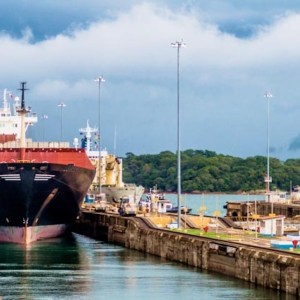
The Panama Canal Authority has issued an advisory to the shipping industry detailing new reductions in daily vessel transits starting in September. According to a report by FreightWaves, the waterway will decrease daily passages from 36 to 34 on September 4, with a further drop to 32 transits scheduled for September 15. Additionally, the authority has delayed previously announced draft increases for Neopanamax vessels, which directly limits the volume of cargo each ship can carry through the locks.
These operational changes are driven by a significant lack of rainfall, with watershed levels currently 34% below historical averages. Officials are moving to conserve the water supply in Lake Gatun not only for current maritime traffic but to ensure adequate resources for human consumption and the 2027 dry season. The authority noted that despite the onset of the rainy season, the watershed is failing to produce the expected hydrologic recovery, creating a direct constraint on global logistics.
The restrictions pose a significant challenge for U.S. trade, as more than 70% of the canal's cargo either originates from or is headed to American ports. Shippers may face higher costs and longer transit times if they are forced to reroute vessels around the Suez Canal or the Cape of Good Hope. Alternatively, increased demand for U.S. West Coast ports and transcontinental rail could strain inland infrastructure, which has already seen recent volume surges and network slowdowns.
For logistics managers and commodity traders, the immediate risks involve service reliability and fluctuating freight rates. Higher costs for fuel and canal reservations, along with unpredictable arrival schedules at East and Gulf Coast terminals, could disrupt retail inventories and industrial production. The canal authority emphasized that securing a confirmed reservation remains the only way to avoid the risk of "extended delays" as competition for available transit slots intensifies.
Editorial Desk — Trade Flow Insight. Reporting and market notes compiled by the Trade Flow Insight editorial team.
Articles liés

Elison de la FMCSA s'exprime de nouveau sur Motus, toujours aucune date pour une réparation complète
Chattanooga – Cela fait peu de temps – moins d'un mois – que Jesse Elison s'est adressé à un événement du secteur et a abordé la question du nouveau système d'enregistrement en difficulté Motus. L'administrateur adjoint de la Federal Motor Carrier Safety Administration (FMCSA) s'est exprimé lundi lors du Broker Compliance Symposium de FreightWaves, l'une des deux sessions d'une journée qui servent de prélude au plus grand Future of Freight Festival qui débute ici mardi. La plus grande nouvelle de sa présentation n'était en réalité pas une nouvelle : après avoir déclaré à la National Motor Frei

Les camionneurs mexicains lancent une grève nationale en raison de l'insécurité routière et de la hausse des coûts
Les entreprises de transport routier mexicaines ont entamé lundi une grève nationale illimitée pour protester contre l'insécurité sur les autoroutes, les vols de marchandises, l'extorsion et la hausse des coûts d'exploitation, avec des manifestations prévues dans les principaux centres de fret le long de la frontière entre le Mexique et les États-Unis. La grève, organisée par la National Chamber of Freight Transportation (CANACAR) et d'autres organisations de transporteurs, appelle à des manifestations à travers le Mexique, notamment à Nuevo Laredo, Reynosa, Monterrey, Tijuana et Mexico. Les p

L'administration Trump dévoile une stratégie halieutique pour stimuler la flotte et la production américaines
L'administration Trump a dévoilé vendredi l'America First Seafood Strategy, exposant ses projets visant à renforcer l'industrie de la pêche commerciale américaine par la réforme réglementaire, l'investissement dans les navires de pêche et les infrastructures portuaires,...