
Rail mega-merger revives proposal for new, expanded Atlanta passenger services — and there’s a trucking angle
A proposed $85-billion merger between Union Pacific and Norfolk Southern could provide the political leverage needed to develop a freight bypass and commuter rail expansion in Atlanta.
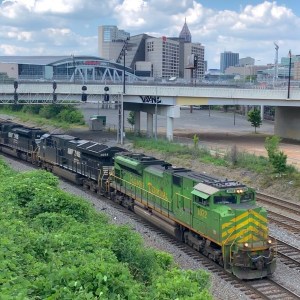
A potential consolidation between Union Pacific and Norfolk Southern has reignited interest in a massive infrastructure project to reroute freight traffic around Atlanta. According to a report by FreightWaves, the creation of a transcontinental railroad could provide the necessary momentum to establish a freight bypass. This plan involves diverting approximately 80% of cargo trains to a peripheral route, which would utilize existing tracks and require roughly 12 miles of new construction to complete a rail loop around the city.
Proponents of the plan, including the Atlanta Design Roundtable, suggest that clearing the city's central tracks would allow for the development of 14 separate commuter rail lines. This shift aims to alleviate significant highway congestion in a region where freight volumes are projected to double by 2050. Mark Hitchcock of Jacobs Engineering noted that without such changes, the vast majority of goods will remain on trucks, further straining the local road network and hindering logistics fluidity.
While the $85-billion merger faces criticism over potential rate increases and reduced competition, stakeholders may use the federal review process to secure concessions for the bypass. The project is estimated to cost up to $6 billion, which advocates argue is significantly cheaper than the $90 billion required for future highway repairs and expansions. The Surface Transportation Board is currently evaluating the rail merger, with a final decision not expected until 2027.
Local political leaders have shown interest in the proposal as Union Pacific considers moving hundreds of management positions away from Atlanta. Hitchcock described the project as a "50-year vision" that requires state-level leadership to succeed. Interested parties have until early September to join the regulatory evaluation process, as the industry weighs the impact of reducing the number of major domestic carriers.
Editorial Desk — Trade Flow Insight. Reporting and market notes compiled by the Trade Flow Insight editorial team.
Articles liés

Elison de la FMCSA s'exprime de nouveau sur Motus, toujours aucune date pour une réparation complète
Chattanooga – Cela fait peu de temps – moins d'un mois – que Jesse Elison s'est adressé à un événement du secteur et a abordé la question du nouveau système d'enregistrement en difficulté Motus. L'administrateur adjoint de la Federal Motor Carrier Safety Administration (FMCSA) s'est exprimé lundi lors du Broker Compliance Symposium de FreightWaves, l'une des deux sessions d'une journée qui servent de prélude au plus grand Future of Freight Festival qui débute ici mardi. La plus grande nouvelle de sa présentation n'était en réalité pas une nouvelle : après avoir déclaré à la National Motor Frei

Les camionneurs mexicains lancent une grève nationale en raison de l'insécurité routière et de la hausse des coûts
Les entreprises de transport routier mexicaines ont entamé lundi une grève nationale illimitée pour protester contre l'insécurité sur les autoroutes, les vols de marchandises, l'extorsion et la hausse des coûts d'exploitation, avec des manifestations prévues dans les principaux centres de fret le long de la frontière entre le Mexique et les États-Unis. La grève, organisée par la National Chamber of Freight Transportation (CANACAR) et d'autres organisations de transporteurs, appelle à des manifestations à travers le Mexique, notamment à Nuevo Laredo, Reynosa, Monterrey, Tijuana et Mexico. Les p

L'administration Trump dévoile une stratégie halieutique pour stimuler la flotte et la production américaines
L'administration Trump a dévoilé vendredi l'America First Seafood Strategy, exposant ses projets visant à renforcer l'industrie de la pêche commerciale américaine par la réforme réglementaire, l'investissement dans les navires de pêche et les infrastructures portuaires,...