
GM targets development costs with commercial vehicle ECM
General Motors' B2B division introduces a custom engine control module to expedite the integration of 6.6-liter gas engines into diverse commercial vehicle platforms.
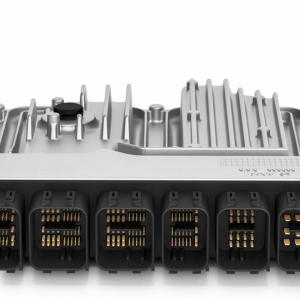
General Motors Powered Solutions has introduced a new engine control module designed to simplify the installation of its 6.6-liter heavy-duty gasoline engines into commercial vehicles. As reported by FreightWaves, the hardware provides a functional starting point for companies building delivery vans and work trucks that do not carry the GM brand. By supplying a controller with pre-loaded base calibrations, the automaker aims to eliminate the complex task of programming an engine to communicate with vehicle sensors from scratch.
The new module acts as a bridge for integrators and fleets, allowing them to move immediately to engine testing rather than beginning development with an unresponsive unit. According to Anthony Locano, a lead engineer at GM Powered Solutions, the package serves as a foundational tool that customers can tailor to their specific vehicle architectures. This flexibility allows third-party manufacturers to add unique features or communication protocols directly to the engine's computer without requiring an external gateway.
While the controller enables immediate performance testing in a laboratory setting, it is not a fully certified product out of the box. Buyers remain responsible for final emissions tuning and certification, as these factors depend on the specific intake and exhaust hardware used in the final vehicle design. Locano described the system as a way to "jumpstart their development" by allowing engineers to focus on hardware integration rather than basic software hurdles.
To ensure long-term utility, GM has equipped the hardware with additional capacity to support future technologies, including potential hybrid configurations. The company is leveraging its high-volume production lines to supply these units to the business-to-business market. Support for the system is integrated into the existing dealer and parts distribution networks, providing commercial clients with access to the same infrastructure used by the automaker's primary vehicle lines.
Editorial Desk — Trade Flow Insight. Reporting and market notes compiled by the Trade Flow Insight editorial team.
Related coverage

Elisabeth Braw: The Undersea War
A ship’s anchor can wreak havoc on the world’s undersea infrastructure, something that has provided plenty of rich material for Splash reporting in recent years. For Elisabeth Braw, the Cook Islands-flagged tanker Eagle S provides one of the most brazen examples. On Christmas Day 2024, the vessel was accused of dragging its anchor 90 km …

Borderlands Mexico: US takes 76% of vehicle exports as September shipments plunge
Borderlands Mexico is a weekly rundown of developments in the world of United States-Mexico cross-border trucking and trade. This week in Borderlands Mexico: US takes 76% of vehicle exports as September shipments plunge; DSV expands US-Mexico freight operations with McAllen office; and Texas university seeks $772,700 for AI-powered Laredo freight project. US takes 76% of vehicle exports as September shipments plunge More than three-quarters of Mexico’s light-vehicle exports were destined for the U.S. during the first nine months of 2026, underscoring the importance of cross-border automotive t

Oil Surges as Iran Tanker Attacks Escalate
Crude posted its biggest gain in a month amid Middle East tensions and hurricane-related production cuts.