
Malacca Strait States Will Keep Waters ‘Free, Open and Safe’
Singapore, Indonesia, and Malaysia pledged to maintain secure transit through the Malacca Strait following regional energy trade disruptions caused by Middle Eastern conflicts.

Officials from Singapore, Malaysia, and Indonesia have reaffirmed their collective responsibility to maintain the Malacca Strait as a secure and accessible passage for global maritime traffic. According to a report from gCaptain, this commitment comes as a response to heightened geopolitical tensions that have severely restricted movement through the Strait of Hormuz. Because the Malacca waterway serves as the primary maritime link between East Asia and the Middle East, its stability is considered essential for international energy security.
The regional cooperation framework relies on voluntary funding and shared information rather than transit fees to maintain navigational aids like lighthouses and beacons. During a recent two-day summit involving representatives from major global powers, Singaporean Transport Minister Jeffrey Siow noted that current global instabilities serve as a reminder that "open sea lanes cannot be taken for granted." The group emphasized that continued investment is necessary to prevent local tensions from escalating into trade disruptions.
Recent military actions involving the United States, Israel, and Iran have significantly reduced shipping volumes in the Persian Gulf, forcing a shift in global commodity flows. Maritime authorities in Southeast Asia contrasted their cooperative management style with the political instability currently affecting Middle Eastern chokepoints. Since the inception of their shared oversight program in 2007, the international community has provided millions of dollars to bolster safety infrastructure throughout the strait.
Editorial Desk — Trade Flow Insight. Reporting and market notes compiled by the Trade Flow Insight editorial team.
Related coverage

Elisabeth Braw: The Undersea War
A ship’s anchor can wreak havoc on the world’s undersea infrastructure, something that has provided plenty of rich material for Splash reporting in recent years. For Elisabeth Braw, the Cook Islands-flagged tanker Eagle S provides one of the most brazen examples. On Christmas Day 2024, the vessel was accused of dragging its anchor 90 km …
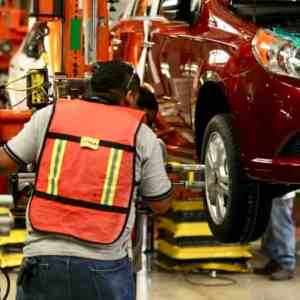
Borderlands Mexico: US takes 76% of vehicle exports as September shipments plunge
Borderlands Mexico is a weekly rundown of developments in the world of United States-Mexico cross-border trucking and trade. This week in Borderlands Mexico: US takes 76% of vehicle exports as September shipments plunge; DSV expands US-Mexico freight operations with McAllen office; and Texas university seeks $772,700 for AI-powered Laredo freight project. US takes 76% of vehicle exports as September shipments plunge More than three-quarters of Mexico’s light-vehicle exports were destined for the U.S. during the first nine months of 2026, underscoring the importance of cross-border automotive t

Oil Surges as Iran Tanker Attacks Escalate
Crude posted its biggest gain in a month amid Middle East tensions and hurricane-related production cuts.