
Trans-Pacific shippers ‘leaving money on the table,’ says analyst
Xeneta analysis suggests trans-Pacific importers could achieve major cost reductions by rerouting cargo through U.S. West Coast gateways as price gaps with East Coast routes widen.
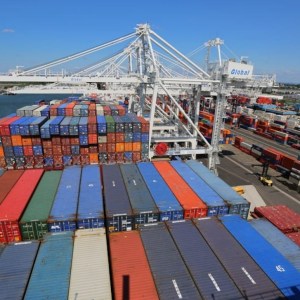
According to reporting by FreightWaves, cargo owners may be overlooking substantial savings by favoring East Coast ports over West Coast alternatives. Xeneta Chief Analyst Peter Sand notes that despite the need for additional rail or truck transport to reach inland destinations, the current price discrepancy makes Pacific gateways a financially superior choice for those with flexible logistics chains.
Data from the week of August 21 shows that shipping a forty-foot equivalent unit from Asia to the U.S. East Coast now costs $10,527, while rates to the West Coast sit at $7,193. This price gap of $3,334 is now larger than the entire cost of shipping a container to either coast prior to the onset of the Middle East crisis in late February.
Market volatility in the U.S. persists as carriers capitalize on robust demand and reduced sailing schedules, pushing East Coast spot rates up nearly 300% from pre-crisis levels. Additional disruptions, including typhoon-related congestion at Asian hubs, continue to impact schedule reliability and pricing structures across the trans-Pacific trade lane.
Sand suggests that shippers look to the European market for leverage, as rates into the Mediterranean and North Europe have begun to soften. He observes that while U.S. rates remain on an upward trajectory, the cooling European market indicates that "carriers are not invincible" and provides a potential framework for importers to negotiate more favorable terms.
Editorial Desk — Trade Flow Insight. Reporting and market notes compiled by the Trade Flow Insight editorial team.
Related coverage

Elisabeth Braw: The Undersea War
A ship’s anchor can wreak havoc on the world’s undersea infrastructure, something that has provided plenty of rich material for Splash reporting in recent years. For Elisabeth Braw, the Cook Islands-flagged tanker Eagle S provides one of the most brazen examples. On Christmas Day 2024, the vessel was accused of dragging its anchor 90 km …

Borderlands Mexico: US takes 76% of vehicle exports as September shipments plunge
Borderlands Mexico is a weekly rundown of developments in the world of United States-Mexico cross-border trucking and trade. This week in Borderlands Mexico: US takes 76% of vehicle exports as September shipments plunge; DSV expands US-Mexico freight operations with McAllen office; and Texas university seeks $772,700 for AI-powered Laredo freight project. US takes 76% of vehicle exports as September shipments plunge More than three-quarters of Mexico’s light-vehicle exports were destined for the U.S. during the first nine months of 2026, underscoring the importance of cross-border automotive t

Oil Surges as Iran Tanker Attacks Escalate
Crude posted its biggest gain in a month amid Middle East tensions and hurricane-related production cuts.