
Borderlands Mexico: US takes 76% of vehicle exports as September shipments plunge
Mexico’s automotive exports and production fell sharply in September, despite the United States maintaining its position as the primary destination for light-vehicle shipments.
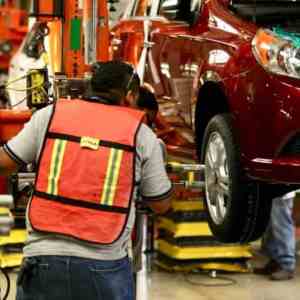
According to FreightWaves, the United States remains the dominant destination for Mexican automotive exports, accounting for 76.4% of all light vehicles shipped abroad during the first nine months of 2026. Data from Mexico’s National Institute of Statistics and Geography shows that 1.93 million units were sent to the U.S. out of a total 2.53 million exports. Other significant markets included Canada at 12.4% and Germany at 2.6%, though overall international shipments saw a 1.5% decrease compared to the previous year.
The automotive sector experienced a significant downturn in September, with worldwide exports dropping 11.9% to 277,369 units. Manufacturing output also contracted, falling 15.1% year-over-year to approximately 301,800 vehicles. These declines were led by major producers like General Motors and Nissan, which saw production dips of 27.1% and 26.3% respectively. Conversely, domestic demand within Mexico remained a bright spot, with new vehicle sales increasing by 7.9% during the same month.
In response to shifting logistics needs along the border, global provider DSV has opened a new facility in McAllen, Texas. This expansion is designed to support cross-border freight operations and supply chain management for manufacturers in northern Mexico, particularly the maquiladora sector. The new office joins DSV's existing network in Texas and California, providing services ranging from customs clearance to ground and ocean transportation for companies moving goods between the two nations.
Additionally, federal funding has been proposed to modernize freight movement through Laredo, Texas. Texas A&M International University is seeking $772,700 to develop a project utilizing artificial intelligence and digital modeling to analyze cargo activity. The initiative aims to identify infrastructure bottlenecks and improve the efficiency of one of the most active commercial gateways between the U.S. and Mexico. This technology-focused approach is intended to build logistics resilience and anticipate future transport disruptions.
Helena Marsh — Energy Markets Editor. Helena covers crude, refined products and the trading houses that move them, with a focus on price formation in the Mediterranean and Black Sea.
Cobertura relacionada

Elison de la FMCSA vuelve a hablar de Motus; sigue sin haber fecha para la reparación completa
Chattanooga–No ha pasado tanto tiempo —menos de un mes— desde que Jesse Elison habló en un evento del sector y abordó el problema del asediado nuevo sistema de registro Motus. El administrador adjunto de la Federal Motor Carrier Safety Administration (FMCSA) habló el lunes en el Broker Compliance Symposium de FreightWaves, una de las dos sesiones de un día que sirven como preludio al mayor Future of Freight Festival que comienza aquí el martes. La mayor novedad de su presentación fue, en realidad, que no hubo ninguna: tras decir en la National Motor Freight Traffic Association a principios de

Camioneros mexicanos inician huelga nacional por la seguridad en las carreteras y el aumento de los costos
Las empresas de transporte por carretera mexicanas iniciaron el lunes una huelga nacional indefinida en protesta por la inseguridad en las carreteras, el robo de carga, la extorsión y el aumento de los costos operativos, con manifestaciones planificadas en los principales centros de carga a lo largo de la frontera entre México y Estados Unidos. La huelga, organizada por la Cámara Nacional del Autotransporte de Carga (CANACAR) y otras organizaciones de camioneros, exige manifestaciones en todo México, incluidos Nuevo Laredo, Reynosa, Monterrey, Tijuana y la Ciudad de México. Las protestas podrí

La administración Trump presenta una estrategia pesquera para impulsar la flota y la producción nacional de EE. UU.
La administración Trump presentó el viernes su America First Seafood Strategy, en la que esboza planes para fortalecer la industria pesquera comercial de EE. UU. a través de reformas regulatorias, inversiones en buques pesqueros e infraestructura costera,...