
Borderlands Mexico: US takes 76% of vehicle exports as September shipments plunge
Mexico’s automotive exports and production fell sharply in September, despite the United States maintaining its position as the primary destination for light-vehicle shipments.
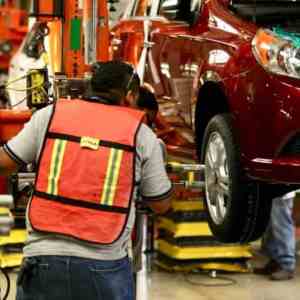
According to FreightWaves, the United States remains the dominant destination for Mexican automotive exports, accounting for 76.4% of all light vehicles shipped abroad during the first nine months of 2026. Data from Mexico’s National Institute of Statistics and Geography shows that 1.93 million units were sent to the U.S. out of a total 2.53 million exports. Other significant markets included Canada at 12.4% and Germany at 2.6%, though overall international shipments saw a 1.5% decrease compared to the previous year.
The automotive sector experienced a significant downturn in September, with worldwide exports dropping 11.9% to 277,369 units. Manufacturing output also contracted, falling 15.1% year-over-year to approximately 301,800 vehicles. These declines were led by major producers like General Motors and Nissan, which saw production dips of 27.1% and 26.3% respectively. Conversely, domestic demand within Mexico remained a bright spot, with new vehicle sales increasing by 7.9% during the same month.
In response to shifting logistics needs along the border, global provider DSV has opened a new facility in McAllen, Texas. This expansion is designed to support cross-border freight operations and supply chain management for manufacturers in northern Mexico, particularly the maquiladora sector. The new office joins DSV's existing network in Texas and California, providing services ranging from customs clearance to ground and ocean transportation for companies moving goods between the two nations.
Additionally, federal funding has been proposed to modernize freight movement through Laredo, Texas. Texas A&M International University is seeking $772,700 to develop a project utilizing artificial intelligence and digital modeling to analyze cargo activity. The initiative aims to identify infrastructure bottlenecks and improve the efficiency of one of the most active commercial gateways between the U.S. and Mexico. This technology-focused approach is intended to build logistics resilience and anticipate future transport disruptions.
Helena Marsh — Energy Markets Editor. Helena covers crude, refined products and the trading houses that move them, with a focus on price formation in the Mediterranean and Black Sea.
Схожі матеріали

Елісон з FMCSA знову згадує Motus, але терміни повноцінного відновлення все ще невідомі
Чаттануга – Минуло небагато часу – менш як місяць – відколи Джессі Елісон виступив на галузевому заході та торкнувся питання проблемної нової системи реєстрації Motus. Заступник адміністратора Федерального управління з безпеки автомобільних перевезень (FMCSA) виступив у понеділок на симпозіумі з питань комплаєнсу брокерів, організованому FreightWaves, — одній з двох одноденних сесій, що служать прелюдією до більшого фестивалю Future of Freight Festival, який розпочинається тут у вівторок. Головною новиною в його презентації фактично стала відсутність новин: після того, як на початку жовтня на

Мексиканські далекобійники розпочали національний страйк через безпеку на автошляхах та зростання витрат
Мексиканські транспортні компанії розпочали в понеділок безстроковий загальнонаціональний страйк на знак протесту проти відсутності безпеки на автошляхах, крадіжок вантажів, вимагання та зростання експлуатаційних витрат. Демонстрації заплановані у великих логістичних вузлах уздовж кордону між США та Мексикою. Страйк, організований Національною палатою вантажних перевезень (CANACAR) та іншими галузевими організаціями, передбачає проведення акцій по всій території Мексики, зокрема в Нуево-Ларедо, Рейносі, Монтерреї, Тіхуані та Мехіко. Протести можуть порушити вантажоперевезення через деякі з най

Адміністрація Трампа оприлюднила стратегію щодо морепродуктів для підтримки риболовецького флоту США та внутрішнього виробництва
Адміністрація Трампа в п'ятницю оприлюднила свою стратегію America First Seafood Strategy, окресливши плани щодо зміцнення комерційної риболовецької галузі США через регуляторні реформи, інвестиції в риболовецькі судна та берегову інфраструктуру...